The Infraspinatus
The Infraspinatus Muscle: Trigger Points and Referred Pain
Where is the Infraspinatus Located?
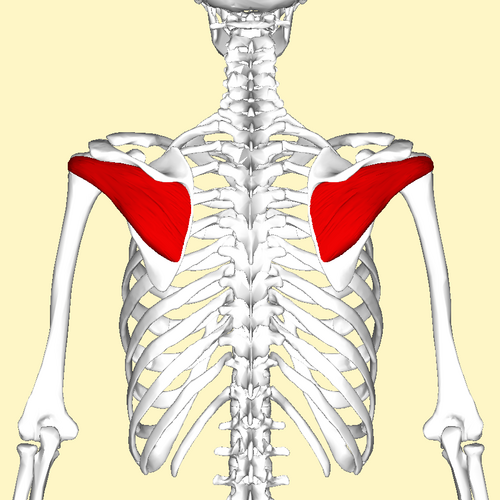
By Anatomography (en:Anatomography (setting page of this image)) [ CC BY-SA 2.1 jp], via Wikimedia Commons
About the Infraspinatus
The infraspinatus covers a large portion of the back of the scapula, just below the spine of the scapula. It primarily rotates the arm outward and helps stabilize the shoulder joint. It may also assist with moving the arm backward. Of the four rotator cuff muscles, the infraspinatus is one of the muscles most likely to develop trigger points.
Infraspinatus Referred Pain and Related Symptoms
Trigger points in the infraspinatus may cause referred pain and other symptoms, including:
- Deep pain in the shoulder joint.
- Pain in the front or back of the shoulder.
- Pain along the inner border of the shoulder blade.
- Reduced shoulder mobility.
- Discomfort when reaching behind the back.
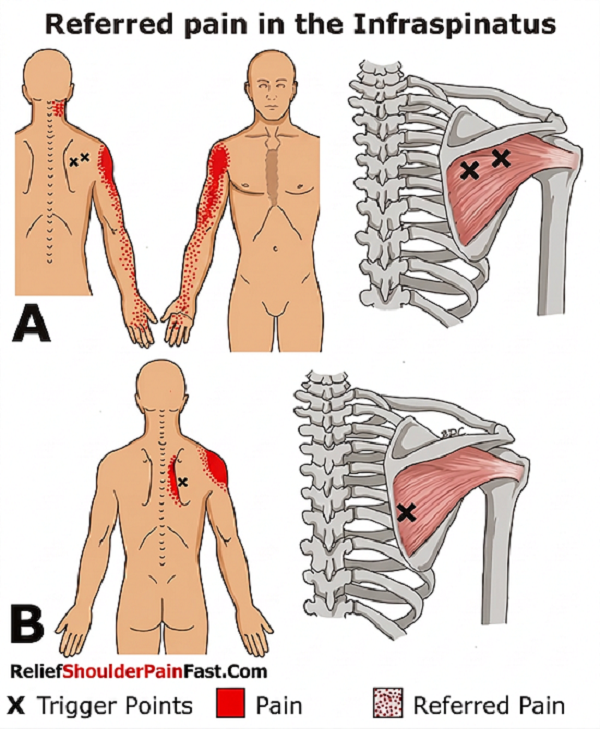
The image above shows possible locations of infraspinatus trigger points.
- A: Most common trigger-point locations
- B: Less common trigger-point location
What May Contribute to Infraspinatus Trigger Points?
- Excessive use of ski poles, such as doing too much ski touring.
- Sleeping on your side with trigger points.
- Getting dressed with your painful arm last in the sleeve.
- Working for long periods with your arms raised.
- Reaching behind the car seat to grab an object.
How to Help Prevent Infraspinatus Trigger Points from Returning
- Avoid excessive use of ski poles, such as doing too much ski touring.
- Avoid lifting objects above your head.
- Lifting and/or pushing heavy objects
- Sleep with a pillow under your affected arm for support.
- Avoid sleeping on the side where you have Trigger points
- When performing prolonged or repetitive work, try to keep your shoulder blades straight and in place. You should stop regularly to retract your shoulder blades together.
How to Locate the infraspinatus
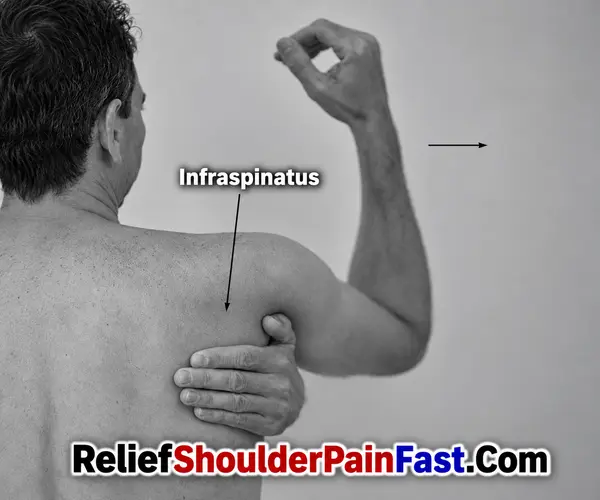
This muscle is very easy to locate. It is located on the back of the shoulder blade. To locate it, place your left hand on the right side of your shoulder blade. Hold your right arm at a 90-degree angle. Then, with your right arm, rotate it externally, as indicated by the arrow in the image above. The movement produced by externally rotating your arm will highlight your right infraspinatus muscle. Your left hand will then be able to feel the muscle move.
Infraspinatus Self-Massage
Self-massage may help reduce tension and tenderness in the Infraspinatus muscles.
NB: The infraspinatus with trigger points will not hurt as long as no
one touches it.
The infraspinatus is a thick, and robust muscle so, to deactivate the trigger points in the
Infraspinatus you will have to use more pressure
than for the
Scalene muscles and the
sternocleidomastoid muscles.
How to deactivate the Infraspinatus trigger points
With your hands
The movement produced by externally rotating your arm will highlight your right infraspinatus muscle. Your left hand will then be able to feel the muscle move.
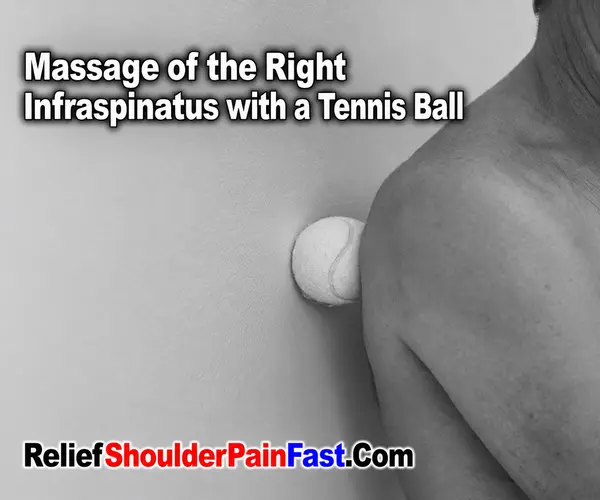
With a Tennis Ball
You can use a tennis ball, which you place between the wall and your infraspinatus muscle, to treat it. To apply more pressure, position yourself so that you have a 45-degree angle with the tennis ball. If you have difficulty positioning the tennis ball, you can always place it in a sock.
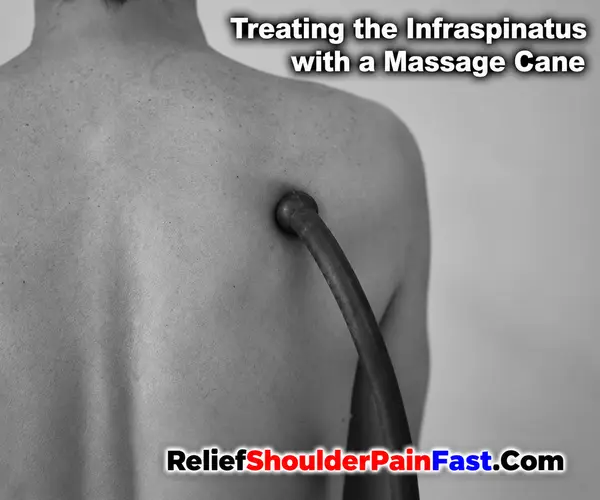
With a Massage Cane
Treatment of the right infraspinatus with a massage cane
Infraspinatus trigger points Deactivation
The infraspinatus is a thick and robust muscle, so it may tolerate more pressure than smaller neck muscles. Increase pressure gradually and remain within a comfortable range.
Tenderness may indicate a sensitive area, but it does not necessarily confirm the presence of a trigger point. Several short sessions may be more comfortable than one prolonged session.
Sources and References
- Clair Davis & Amber Davis. The Trigger Point Therapy Workbook: Your Self-Treatment Guide for Pain Relief..New Harbinger Self-Help Workbook,2013.
- The Infraspinatus : Anatomy and Function — TeachMeAnatomy.Com
- The Infraspinatus — WebMd
I hope you find this information helpful.
Thank you for reading,
Michel Bourgeois
Licensed Massage Therapist
This article is provided for educational purposes only and does not constitute medical advice, a diagnosis, or treatment.