The Sternocleidomastoid (SCM)
SCM Trigger points, referred-pain patterns, and self-massage information
Where Is the SCM Located?
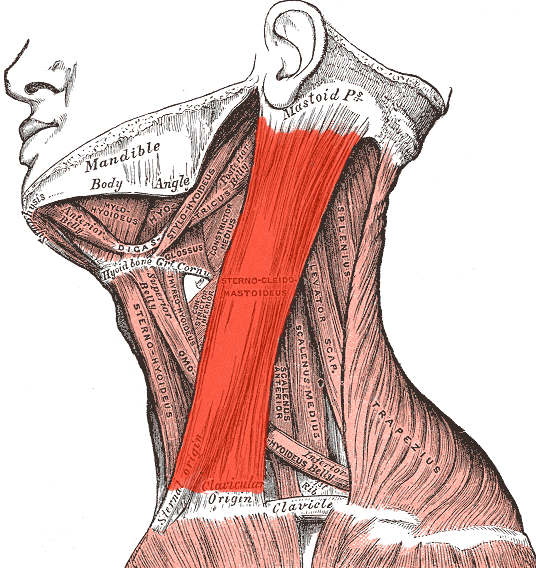
By Image:Gray385.png modified by Uwe Gille - Image:Gray385.png, Public Domain, Link
About the SCM
The SCM is a large muscle located bilateraly on front and side of
the neck. The sternocleidomastoid muscle allows for flexion and
lateral tilting of the head when acting in isolation, and hyperextension
and flexion of the neck when both sternocleidomastoid muscles act
simultaneously. It therefore enables the head to be turned in all
directions.
Although the SCM does not directly cause shoulder pain, trigger
points in this muscle tend to perpetuate other trigger points in the scalenes,
which in turn can affect your shoulder. For this reason, it is also very important
to know how to treat this muscle.
SCM Referred-Pain Pattern and Related Symptoms
The sternocleidomastoid, commonly called the SCM, has an extensive and complex trigger-point referral pattern. It consists of two distinct divisions—the sternal head and the clavicular head—each of which may be associated with a different pattern of referred pain and symptoms.
The sternocleidomastoid, commonly called the SCM, has an extensive and complex trigger-point referral pattern. It consists of two distinct divisions—the sternal head and the clavicular head—each of which may be associated with a different pattern of referred pain and symptoms.
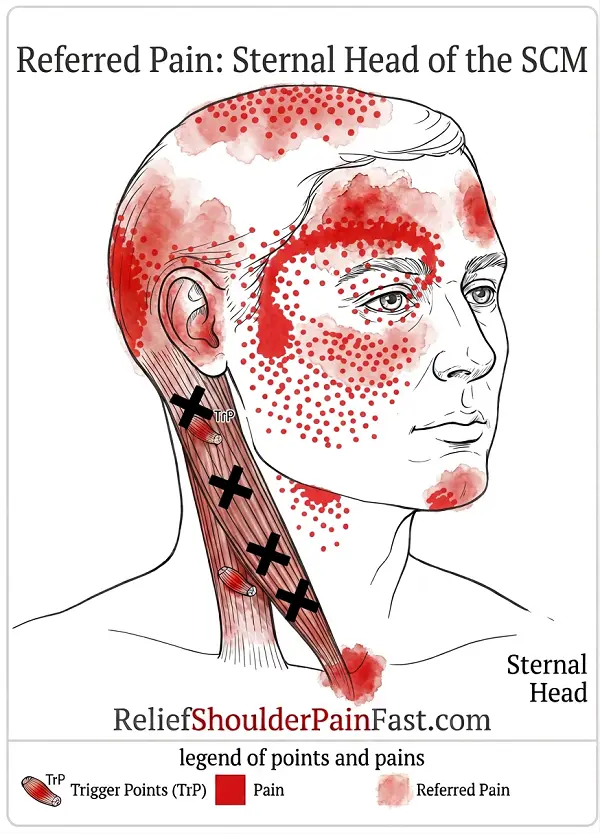
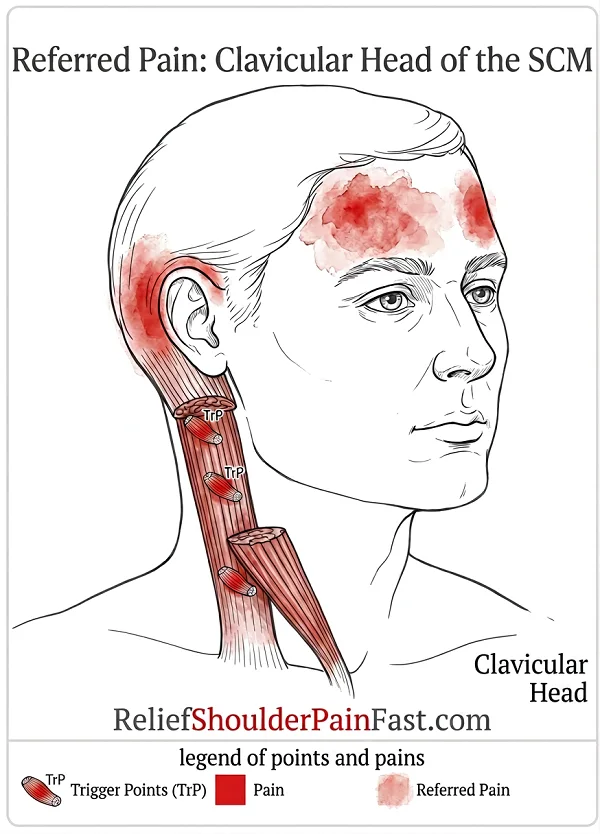
Symptoms Sometimes Associated With the Sternal Head
- May have visual disturbances
- Jaw pain
- Pain around the eyes
- Pain in the upper sternum
- Throat discomfort
- Pain in the back of the head
Symptoms Sometimes Associated With the Clavicular Head
- Pain in the forehead
- Ear pain
- Pain behind the ear
- Dizziness or balance problems
- Hearing changes on the affected side
How to Help Prevent SCM Trigger Points from Returning
- Improve your head posture, especially if your head tends to lean forward
- Use a headset when talking on the phone
- Avoid overworking your neck muscles
- Avoid repeated or forceful neck movements
- Avoid sleeping with pillows that are too high
What May Contribute to SCM Trigger Points?
SCM trigger points may be associated with a sudden change in head position, whiplash, prolonged neck extension—such as when painting a ceiling—scoliosis, chronic coughing, asthma, emphysema, or hyperventilation.
SCM Self-Massage
Gentle self-massage may help reduce tension and tenderness in the sternocleidomastoid muscle. Before beginning, turn your head slightly to help identify the SCM.
To massage the SCM, gently hold the muscle between your thumb and fingers, as shown in the images below. Using light, comfortable pressure, slowly roll or knead the muscle between your fingers. Work on one side at a time, releasing your grip before moving to the other side. Never massage an area where you can feel a pulse.The technique should feel comfortable and should never cause sharp pain, dizziness, numbness, tingling, or unusual symptoms.
Caution: The SCM lies close to the carotid artery and other sensitive structures in the neck. Avoid pressing deeply into the front or side of your neck. Use only gentle pressure and massage one side at a time.
If you feel a pulse between your thumb and fingers, release your grip immediately. Reposition your fingers before continuing, and never massage an area where you can feel a pulse.
Stop immediately if you experience dizziness, light-headedness, nausea, unusual pain, numbness, tingling, or worsening symptoms. This information is educational and is not a substitute for medical evaluation or treatment.
How to Massage the SCM
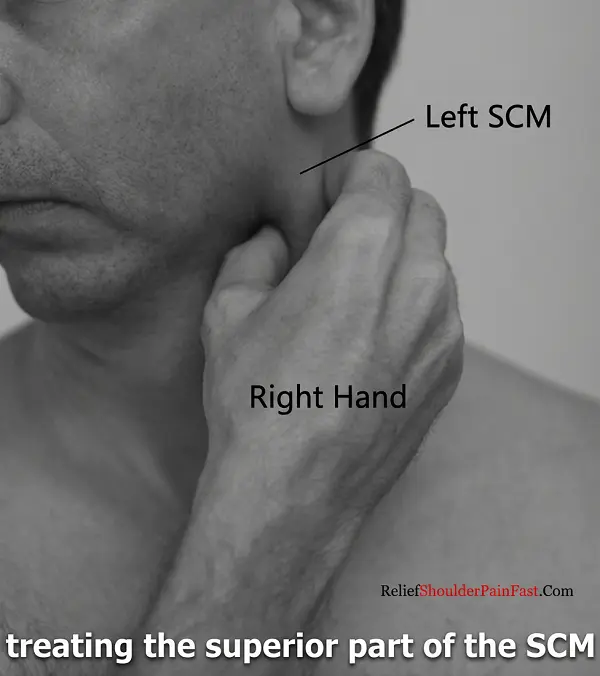
SCM Superior Part
Sternal Division
Turn your head slightly and gently hold the muscle between your thumb and finger.Using light, comfortable pressure, slowly roll or knead the muscle between your fingers.
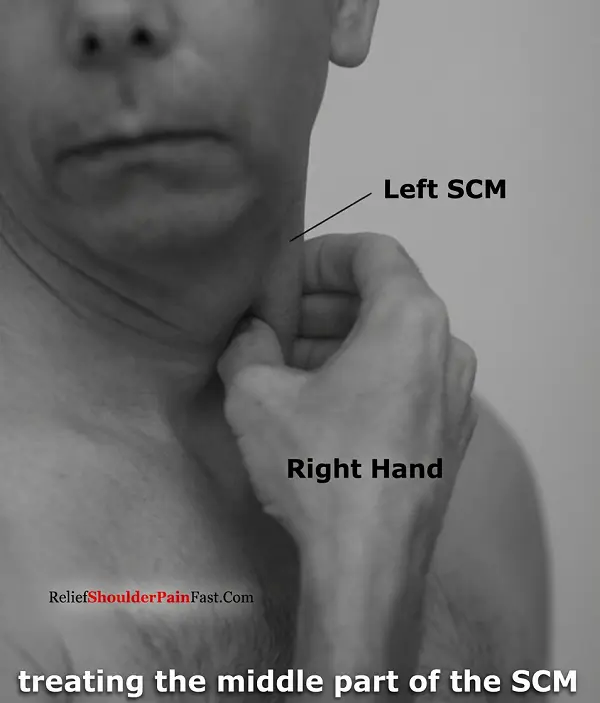
SCM Middle Part
Sternal Division
Gently hold the muscle between your thumb and fingers.Using light, comfortable pressure, slowly roll or knead the muscle between your fingers.
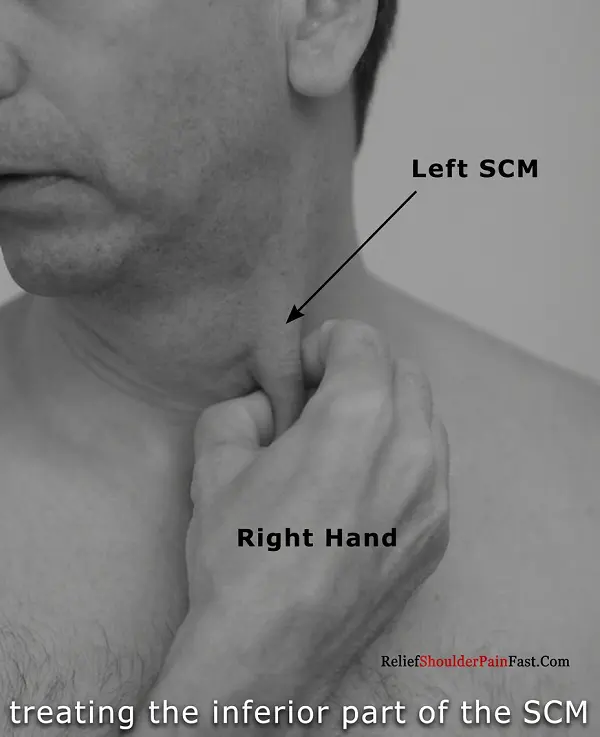
SCM Inferior Part
Sternal Division
Gently hold the muscle between your thumb and fingers.Using light, comfortable pressure, slowly roll or knead the muscle between your fingers.
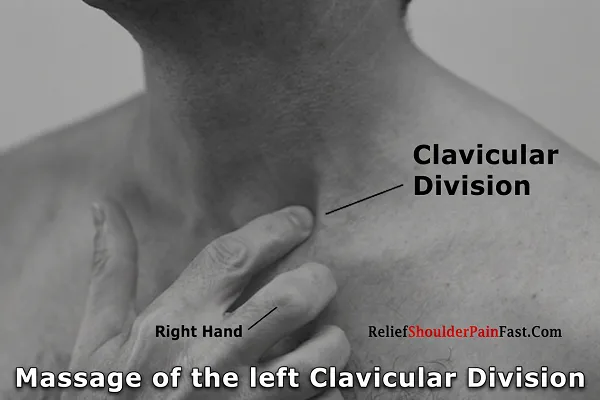
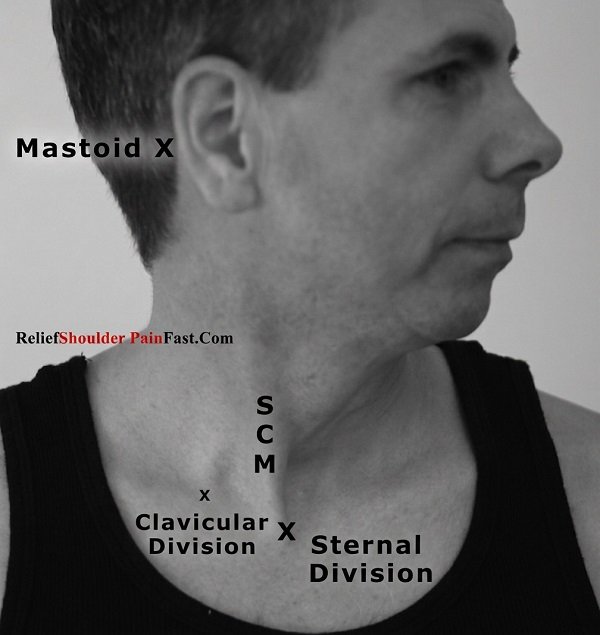
SCM Massage
Clavicular Division
My finger is on the Anterior scalene but you can see next to my finger the clavicular Division. Just apply your finger on the calvicular head and massage it slowly.
Massaging the Clavicular Head of the SCM
Because this portion of the muscle can be more difficult to grasp, use the pad of one finger to apply gentle, controlled pressure to the muscle. Hold for approximately 5 to 10 seconds, then release and gently massage the area for another 5 to 10 seconds.
Tenderness may indicate a sensitive area, but it does not necessarily confirm the presence of a trigger point. Several short sessions may be more comfortable than one prolonged session.
Sources and References
- Clair Davis & Amber Davis. The Trigger Point Therapy Workbook: Your Self-Treatment Guide for Pain Relief..New Harbinger Self-Help Workbook,2013.
- Sternocleidomastoid Muscle: Anatomy and Function — TeachMeAnatomy.Com