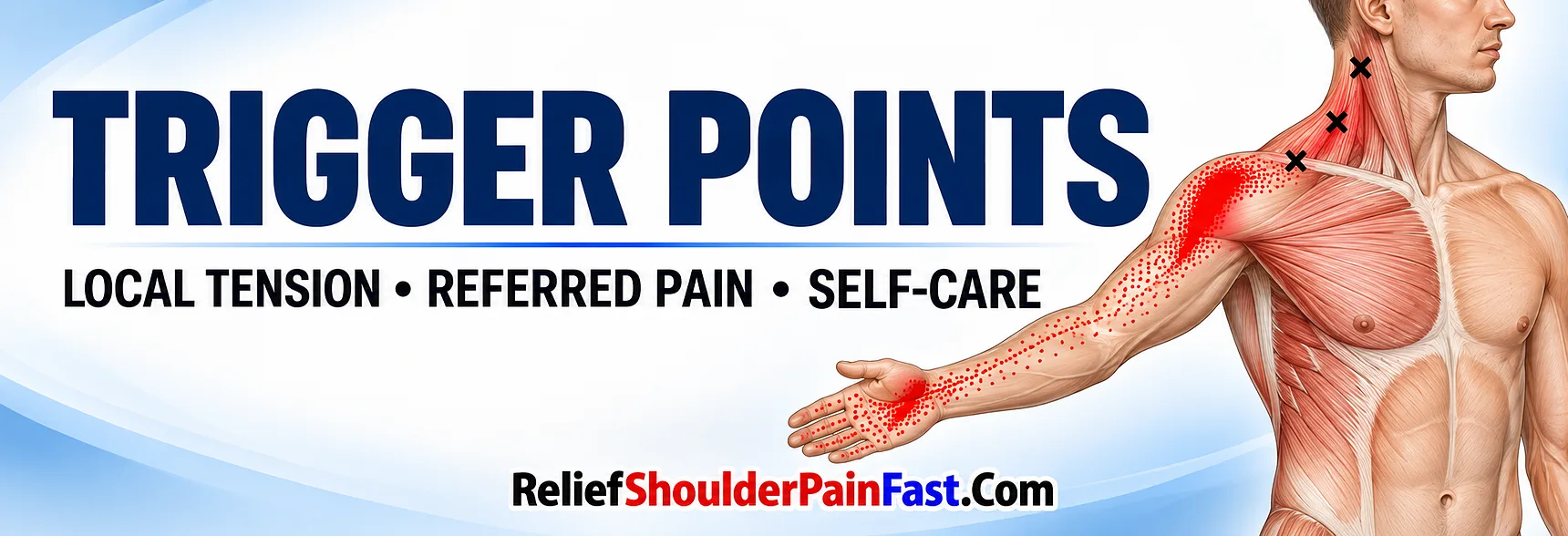
What Is a Trigger Point?
Drs. Janet Travell and David Simons, authors of Myofascial Pain and Dysfunction: The Trigger Point Manual, described a myofascial trigger point as a highly sensitive spot associated with a palpable nodule in a taut band of skeletal muscle. In everyday language, people often call it a muscular “knot.”
More than one sensitive point may be present in an affected muscle. Pressure on one of these areas may reproduce discomfort locally or create pain somewhere else—a phenomenon known as referred pain.
Muscles exposed to sustained overload, repeated movement, injury, poor ergonomics, or stress-related tension may become painful and less comfortable to move. Proposed explanations for trigger points include changes in muscle activity, local circulation, and pain sensitivity, although the exact mechanisms remain under study. A painful muscle may also feel stiff and may not lengthen or contract as comfortably as usual.

The Domino Effect
If a painful or fatigued muscle is not functioning comfortably, nearby muscles may change how they work to help complete the movement. Those muscles can then become overloaded, producing a chain reaction of tension and discomfort.
Forceful stretching is not always helpful when a muscle is acutely painful, but stretching is not universally forbidden because trigger points are present. Begin with gentle, pain-free movement and appropriate treatment. Once symptoms settle, gradual stretching and strengthening may help restore comfortable function. Stop if an exercise causes sharp pain, numbness, tingling, weakness, or worsening symptoms.
Trigger Points Are Common
Many people notice tender spots in muscles that are frequently used or held under tension. These areas may develop in association with physical overload, repetitive activity, injury, prolonged posture, poor sleep, or emotional stress.
Sensitive muscles around the neck and shoulders may be associated with neck or shoulder pain, headaches, or symptoms traveling into the arm and hand. However, dizziness, balance problems, visual changes, sinus symptoms, and hand numbness can have many causes. Do not assume that these symptoms come from trigger points; persistent, severe, sudden, or unexplained symptoms should be evaluated by a healthcare professional.
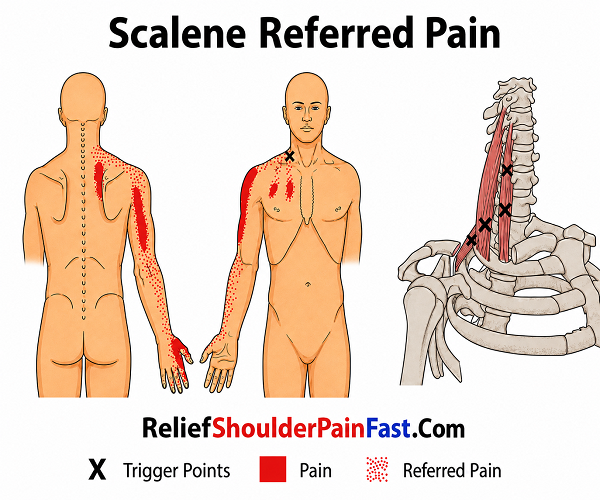
Referred Pain
A defining clinical feature associated with trigger points is referred pain: discomfort felt somewhere other than the sensitive muscular area being pressed.
The scalene illustration is a useful example. Sensitive points in muscles at the side of the neck may be associated with discomfort felt around the shoulder, chest, arm, hand, or fingers. A familiar pattern can offer a clue, but an illustration cannot diagnose the cause of a person's symptoms.
Pain, tingling, numbness, or weakness in an arm or hand can also involve nerves, blood vessels, joints, or other medical conditions and deserves professional assessment when persistent or worsening.
Trigger-Point Therapy
Trigger-point therapy uses carefully directed pressure and movement to help reduce muscular tenderness and improve comfortable motion. Treatment may be provided by a qualified professional or, when appropriate, practiced gently as self-massage.
Self-massage is low-cost and convenient, but it is not guaranteed to resolve every type of pain and should not replace diagnosis or necessary medical care. Pressure should feel tolerable and controlled—not sharp, electrical, numbing, or bruising.
Tools for Trigger-Point Self-Massage

Your Hands and a Tennis Ball
The good news is that self-massage does not need to be expensive. Your hands and a tennis ball may be enough for many accessible muscular areas.
Using a ball against a wall gives you more control than lying on it. Position the ball over muscle rather than bone, lean back gradually,If you have difficulty controlling the ball or keeping it in position, place the tennis ball inside a sock. Hold the end of the sock to guide the ball and position it precisely where you need it.
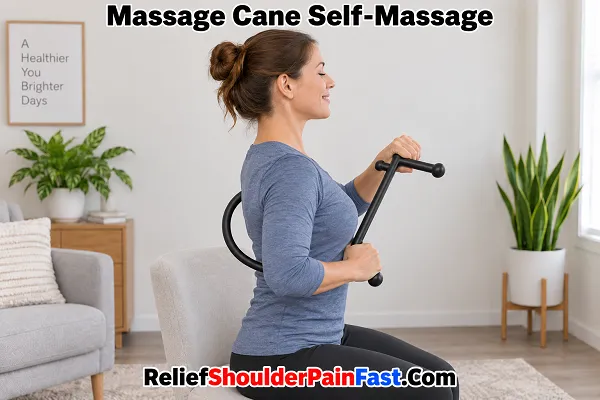
A Massage Cane
If you practice self-massage regularly and want to reduce strain on your hands, fingers, and thumbs, a massage cane can be useful. Its curved shape may help you reach muscular areas of the upper and middle back that are otherwise difficult to access.
Because the cane provides leverage, it is easy to apply too much pressure. Use only a light pull at first, keep the rounded tip away from the spine and sensitive structures, and never continue through sharp or radiating pain.
Important Safety Note
Seek prompt medical care for chest pain, difficulty breathing, sudden severe headache, new weakness, loss of coordination, fainting, symptoms after significant injury, or pain accompanied by fever, unexplained swelling, or discoloration. Consult a healthcare professional before self-massage if you take blood thinners, have a bleeding disorder, severe osteoporosis, impaired sensation, active cancer treatment, a blood-clot risk, or recent surgery.
Sources and Further Reading
- Travell, J. G., and Simons, D. G. Myofascial Pain and Dysfunction: The Trigger Point Manual.
- StatPearls: Myofascial Pain Syndrome
- Mayo Clinic: Myofascial Pain Syndrome
- Cleveland Clinic: Myofascial Release Therapy
I hope you found this information useful. Thank you for reading!
Michel Bourgeois
Licensed Massage Therapist
This article is for general education only and is not medical advice, diagnosis, or treatment.