The Scalenes
The Scalene Muscles: Trigger Points and Referred Pain
Where are the Scalenes Located?
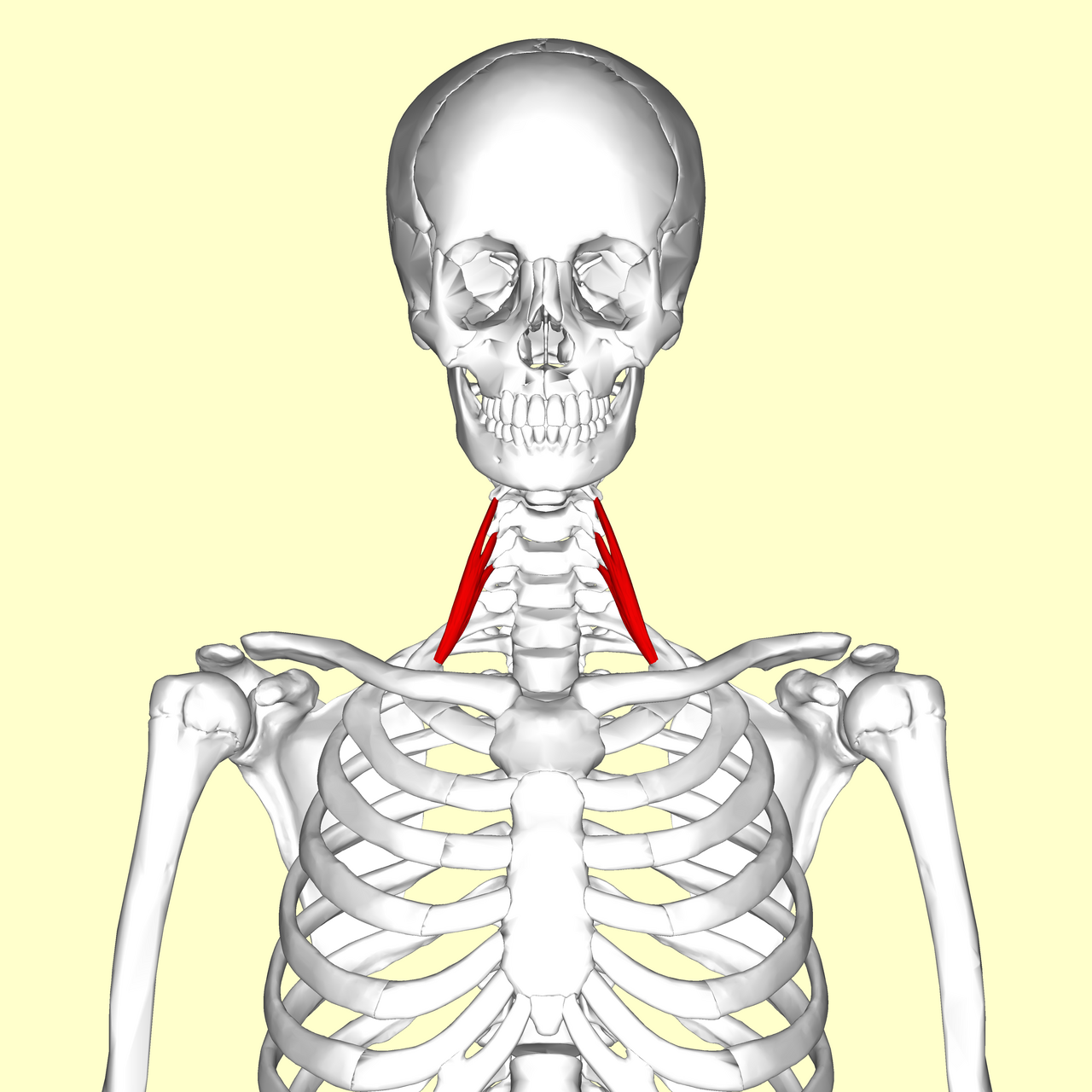
By Anatomography (en:Anatomography (setting page of this image)) [CC BY-SA 2.1 jp], via Wikimedia Commons
About the Scalene Muscles
The scalenes attach the cervical vertebrae to the first and second ribs. They are located on either side of the front of the neck. They consist of three muscles, namely:
- Anterior scalene
- Middle scalene
- Posterior scalene
Scalene Referred-Pain Pattern and Related Symptoms
Trigger points in the scalene muscles may refer pain to the chest, shoulder, arm, thumb, and index finger. This referred-pain pattern can sometimes resemble symptoms associated with other conditions, including:
- Angina (Chest Pain)
- Thoracic outlet syndrome
- Rotator cuff tendinitis
- Carpal tunnel syndrome

How to Help Prevent Scalene Trigger Points from Returning
- Avoid reading with your head turned for long periods.
- Avoid prolonged forward-head posture.
- Use proper technique when pulling, lifting, or carrying heavy objects.
What May Contribute to Scalene Trigger Points?
- Chest breathing instead of diaphragmatic breathing
- Playing a wind instrument
- Lifting or pushing heavy objects
- Carrying an overly heavy backpack
- Activities involving forceful breathing, such as swimming or running
- Smoking cigarettes or cigars
- Whiplash or another neck injury
What is Thoracic outlet syndrome?
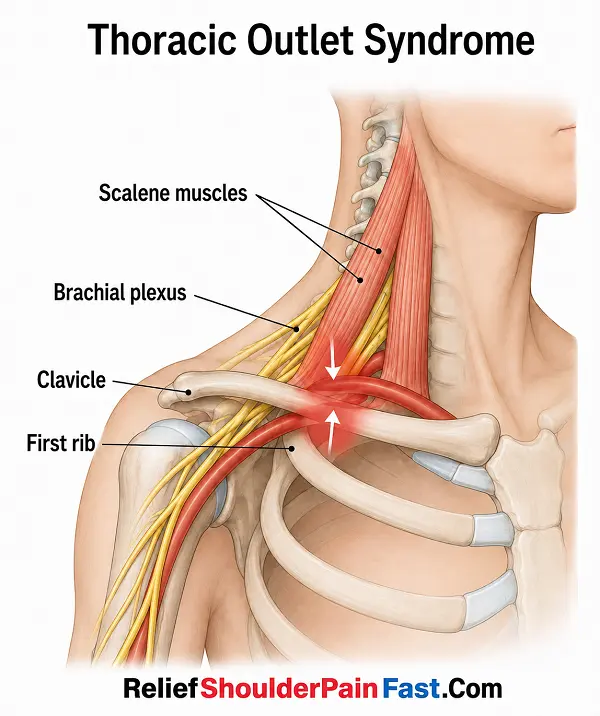
The thoracic outlet is the narrow space between the collarbone and the first rib. Important nerves and blood vessels pass through this area on their way to the shoulder, arm, and hand.
Tight or overworked scalene muscles may contribute to discomfort, tingling,
or numbness that travels into the arm and hand. These symptoms can sometimes
resemble those associated with thoracic outlet syndrome, a condition involving
compression of nerves or blood vessels near the neck and shoulder.
Because
similar symptoms can have different causes, consult a qualified
healthcare professional for an accurate diagnosis.
Trigger points in the scalene muscles may contribute to compression or irritation of nearby nerves, potentially causing tingling or numbness in the arm and hand on the affected side. Thoracic outlet symptoms may sometimes be related to your sleeping position
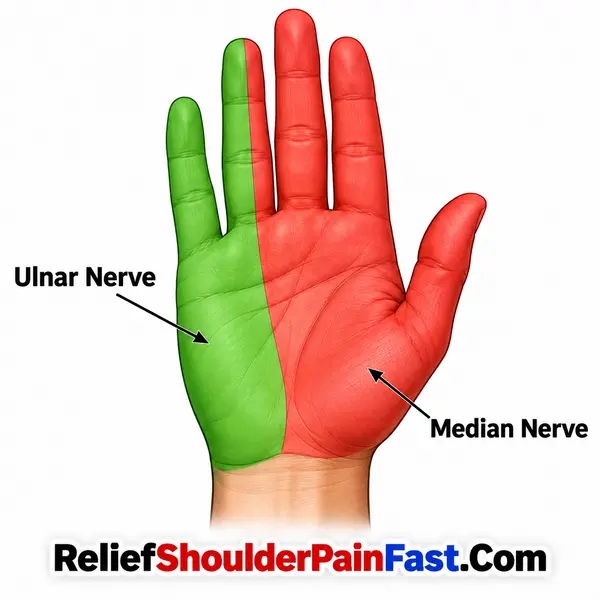
Symptoms may be felt along areas supplied by the ulnar and median nerves.
The ulnar nerve provides sensation to the little finger, half of the ring finger, and the corresponding area of the palm, as shown in the graphic.
The median nerve provides sensation to the thumb, index and middle fingers, half of the ring finger, and the corresponding area of the palm.
How to Locate the Scalene Muscles
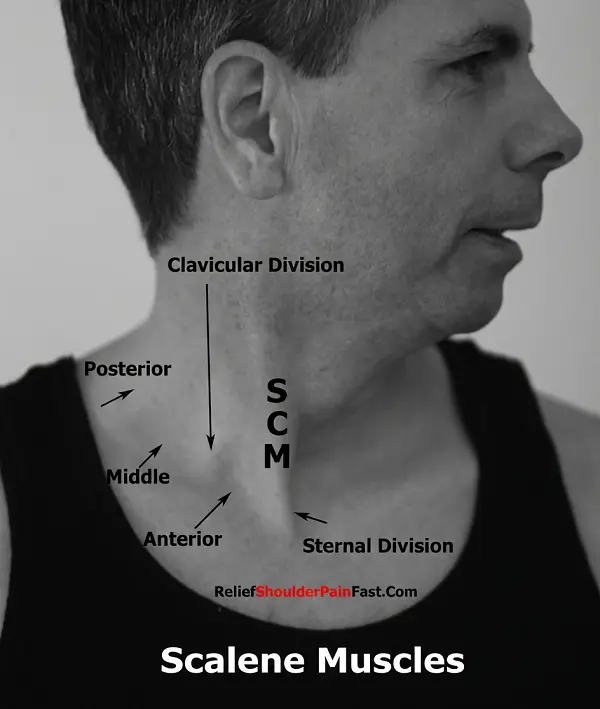
The scalene muscle group consists of three muscles: the anterior, middle, and posterior scalenes, as shown in the image above. Of the three, the anterior scalene is often the greatest source of trigger-point-related problems and referred pain. It lies deep along the side of the neck, underneath and slightly behind the Sternocleidomastoid (SCM).
Scalene Self-Massage
Gentle self-massage may help reduce tension and tenderness in the scalene muscles. Before beginning, turn your head to help identify the scalenes as shown in the picture above.
To massage the left anterior scalene muscle, turn your head slightly to the right. With your
right hand, gently grasp the left sternocleidomastoid (SCM) between your fingers
and thumb. Release your thumb, then use your fingertips to move the SCM slightly
forward.
This can help you reach the scalene muscles located behind it. Using your
middle finger, supported by your ring finger, apply gentle, steady pressure
for 5 to 10 seconds. A tender spot may indicate a trigger point. Then massage
the area for 30 to 60 seconds using small, gentle up-and-down movements.
Begin
near the top of the muscle and gradually work down toward the collarbone.
Allow the skin to move naturally with your fingers rather than sliding over it. Several
short sessions throughout the day may be more comfortable and effective than one
prolonged session. Repeat on the opposite side as needed.
Note: Make sure your fingernails are trimmed before massaging the scalene muscles.
Caution: The neck contains sensitive nerves and blood vessels. Use gentle pressure, never press directly on an area where you feel a pulse, and stop if you experience dizziness, tingling, numbness, nausea, or sharp pain.
If you feel a pulse between your thumb and fingers, release your grip immediately. Reposition your fingers before continuing, and never massage an area where you can feel a pulse.
How to Massage the Scalene Muscles
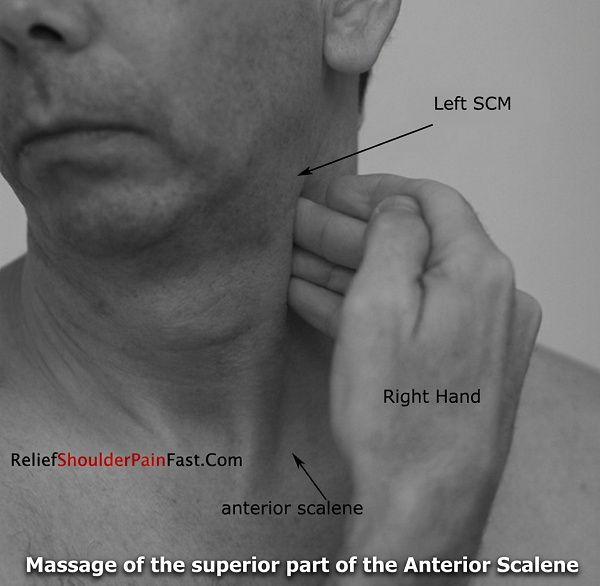
Upper Part of the Anterior Scalene
Turn your head slightly and use the pad of your fingers to massage the superior part gently. Using light, comfortable pressure.
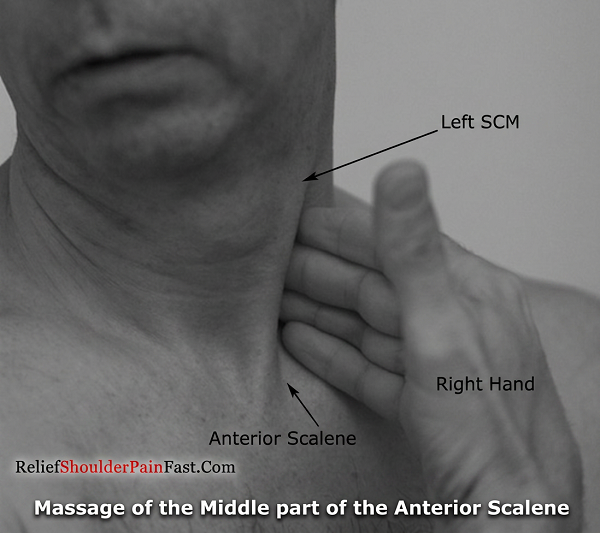
Middle Part of the Anterior Scalene
Turn your head slightly and use the pad of your fingers to massage the middle part gently. Using light, comfortable pressure.
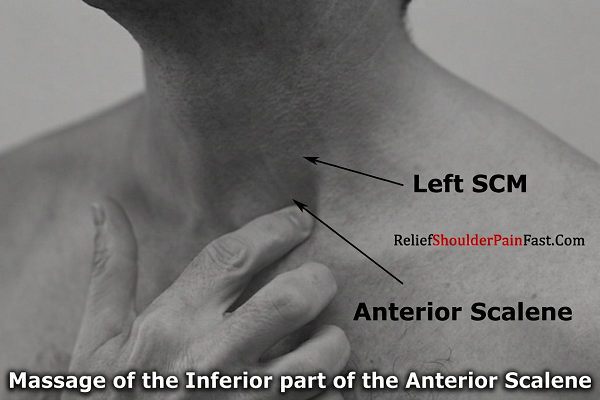
Lower Part of the Anterior Scalene
Use the pad of one finger to apply gentle, controlled pressure to the lower part of the muscle. Avoid any area where you feel a pulse.
Massaging the Inferior part of the Anterior Scalene
Because this portion of the muscle can be more difficult to grasp, use the pad of one finger to apply gentle, controlled pressure to the muscle. Hold for approximately 5 to 10 seconds, then release and gently massage the area for another 5 to 10 seconds.
Tenderness may indicate a sensitive area, but it does not necessarily confirm the presence of a trigger point. Several short sessions may be more comfortable than one prolonged session.
Sources and References
- Clair Davies & Amber Davies. The Trigger Point Therapy Workbook: Your Self-Treatment Guide for Pain Relief. New Harbinger Publications, 2013.
- The Scalenes : Anatomy and Function — TeachMeAnatomy.Com
- Thoracic Outlet Syndrome — Cleveland Clinic
I hope you find this information helpful.
Thank you for reading,
Michel Bourgeois
Licensed Massage Therapist
This article is provided for educational purposes only and does not constitute medical advice, a diagnosis, or treatment.