
Carpal Tunnel Syndrome
Tingling or numbness in your hands?
What Is Carpal Tunnel Syndrome?
Carpal tunnel syndrome occurs when the median nerve is compressed as it passes through a narrow passageway in the wrist called the carpal tunnel. This may cause numbness, tingling, burning, pain or weakness in the hand.
Where Symptoms Are Usually Felt
Symptoms commonly affect the thumb, index finger, middle finger and the thumb-side half of the ring finger. The little finger is usually not affected because it is supplied by a different nerve.
Why Symptoms May Be Worse at Night
Many people sleep with their wrists bent, which can increase pressure within the carpal tunnel. A clinician may recommend a properly fitted nighttime wrist brace that keeps the wrist in a straight, neutral position.
What If the Little Finger and Half of the Ring Finger Are Numb?
Numbness or tingling that prominently affects the little finger and the little-finger side of the ring finger is not the typical pattern of carpal tunnel syndrome. It may involve the ulnar nerve or another condition. Muscular trigger points can sometimes contribute to referred discomfort, but persistent sensory changes should be assessed by a qualified healthcare professional rather than attributed to a muscle without evaluation.
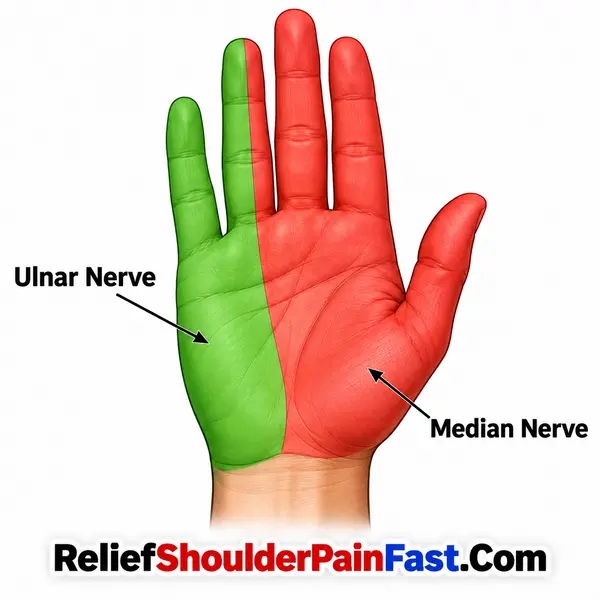
Median and Ulnar Nerve Sensory Areas
The median nerve normally supplies the thumb, index finger, middle finger, and thumb-side half of the ring finger. The ulnar nerve supplies the little finger and the little-finger side of the ring finger.
Three Common Screening Maneuvers
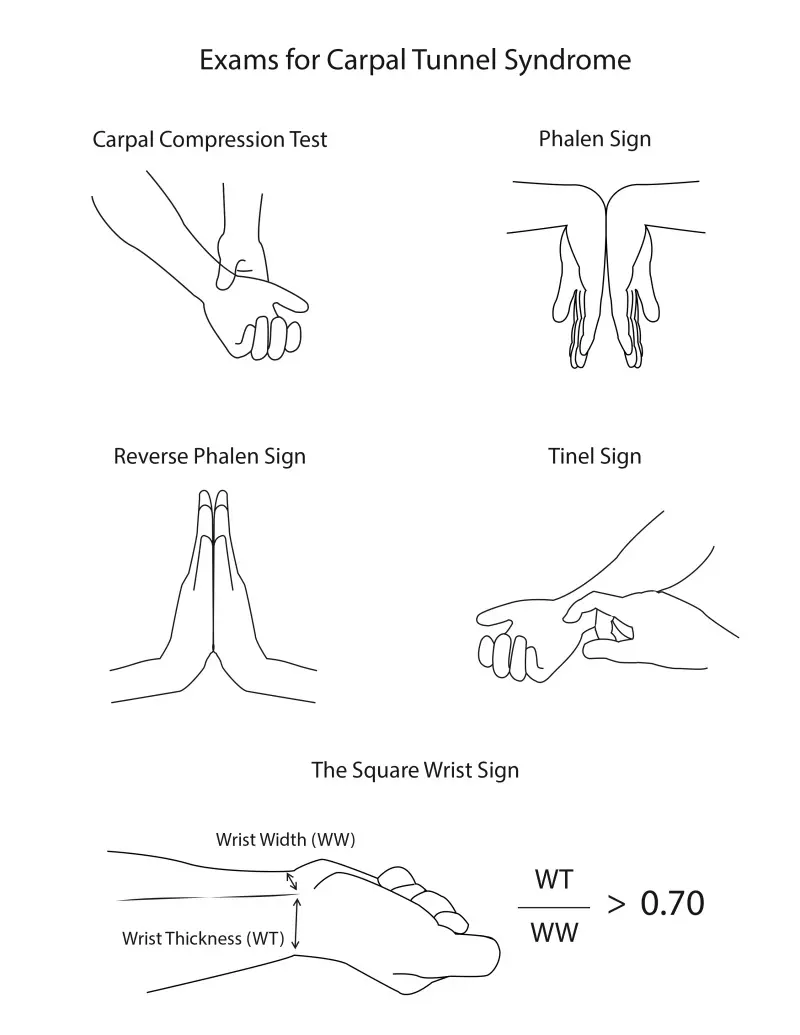
Healthcare professionals may use provocative maneuvers to see whether a wrist position or gentle pressure reproduces symptoms in the median-nerve distribution. These maneuvers are only pieces of a complete assessment—they are not definitive home diagnostic tests.
Phalen Maneuver
The wrists are gently flexed and held with the backs of the hands together. Tingling or numbness in the thumb, index, middle or thumb-side ring finger may be considered a positive response.
Reverse Phalen Maneuver
The palms are placed together with the wrists gently extended. Reproduction of familiar median-nerve symptoms may provide useful information for a clinician.
Tinel or Carpal Compression Maneuver
A clinician may gently tap over the median nerve or apply steady pressure over the carpal tunnel to see whether familiar tingling travels into the median-nerve fingers.
Do Not Diagnose Yourself From These Tests
A negative result does not prove that you do not have carpal tunnel syndrome, and a positive result does not confirm it. The maneuvers have limited accuracy when used by themselves. Stop if a test causes significant pain, and consult a doctor or other qualified healthcare professional for persistent symptoms, weakness, loss of sensation or difficulty using the hand.
Video: How the Three Maneuvers Are Performed
Video Coming Soon
Phalen, reverse Phalen and gentle carpal compression maneuvers
What Else Can Cause Tingling in the Hands?
Not every case of hand tingling comes from the wrist. A healthcare professional may also consider irritation of a nerve in the neck, nerve compression elsewhere along the arm, ulnar nerve involvement, peripheral neuropathy and other medical causes.
Posture, sleeping position and prolonged wrist positions may aggravate symptoms in some people. Tight or sensitive tissues around the neck, chest or forearm may coexist with nerve symptoms, but the precise source can take time and a proper examination to identify. Symptoms associated with the chest and shoulder region may sometimes be evaluated for conditions such as thoracic outlet syndrome.
Can Forearm Self-Massage Help?
Gentle self-massage may help relieve muscular tension in the forearm, but it does not establish a diagnosis and should not be presented as a way to decompress the median nerve inside the carpal tunnel. Avoid forceful pressure directly over the wrist or any technique that increases tingling, numbness, burning or pain.
If your symptoms persist, worsen or interfere with sleep, grip strength or daily activities, arrange an assessment with your doctor. A physical therapist, occupational therapist or appropriately qualified massage therapist may also help address related muscular tension after serious or progressive causes have been evaluated.
Make Sure You See Your Doctor
Early assessment matters because prolonged pressure on the median nerve can lead to lasting weakness or loss of sensation. Seek prompt medical care if you develop increasing weakness, begin dropping objects, notice wasting at the base of the thumb or experience persistent numbness.
Sources and Further Reading
Educational information only: This article is not medical advice and is not intended to diagnose or treat carpal tunnel syndrome or any other condition.
I hope you find this information useful.
Thank you for reading,
Michel Bourgeois
Licensed Massage Therapist