Neck and Shoulder Heating Pad
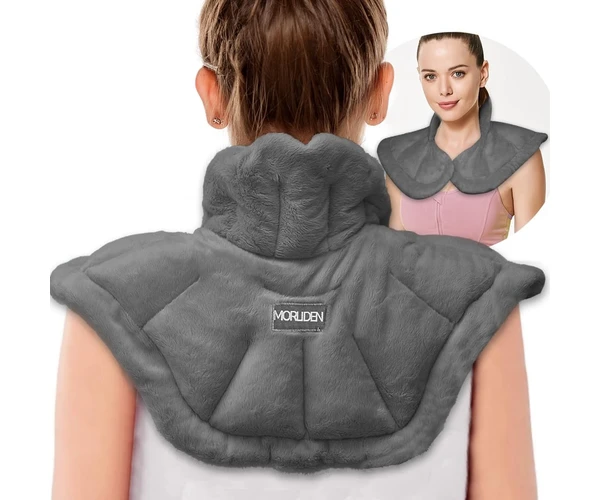
This soft wrap sits across the tops of your shoulders and around the back of your neck for gentle warmth while you relax.
View the heating pad on Amazon
By Michel Bourgeois, Licensed Massage Therapist
Certified in Energy Kinesiology and Biochemical Kinesiology
General educational information
Head, neck & jaw • Muscle education
When your head hurts, the place where you feel discomfort is not always the place where it starts. Some muscles in the neck and jaw can produce pain felt elsewhere. This guide introduces five muscle groups and helps you explore their possible connections to head discomfort.
As a massage therapist, I want to make this topic easier to understand. Rather than listing every muscle that could be involved, I will focus on the upper trapezius, sternocleidomastoid (SCM), suboccipitals, temporalis, and masseter.
Hover over an area or use the buttons below to see possible muscle connections on the right. Highlighted areas are navigation regions, not places to apply pressure.
Possible muscle connections only; this map does not identify the cause of a headache. Highlighted regions are not instructions for applying pressure.
Referred pain is discomfort felt away from its source. Research has examined whether pressure on sensitive areas in head and neck muscles can reproduce familiar headache pain. That finding does not mean every headache comes from a trigger point, or that a tender muscle proves the diagnosis.
Migraine, for example, can include neck stiffness or pain as part of the attack. A painful neck therefore does not automatically explain a headache. An individual assessment matters.
Where it is: Across the top of your shoulders and into the back of your neck.
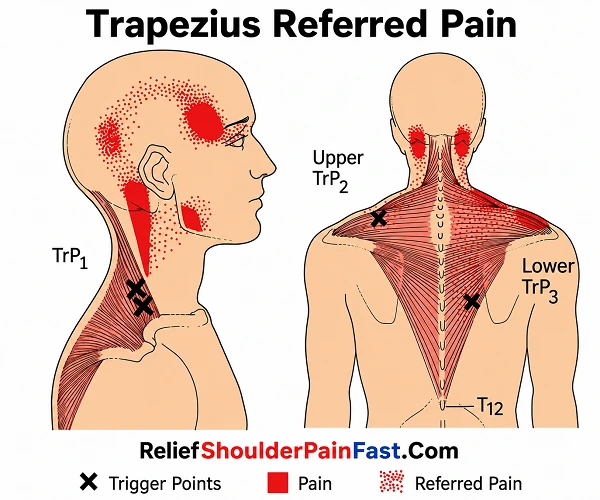
The upper portion of the trapezius is one of the muscles examined in research on tension-type headaches. Reported referral areas can include the temple and side of the head.
As an Amazon Associate I earn from qualifying purchases.
This soft wrap sits across the tops of your shoulders and around the back of your neck for gentle warmth while you relax.
View the heating pad on Amazon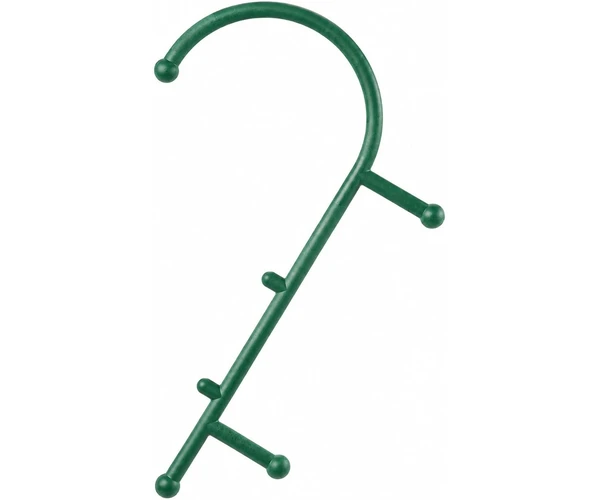
The curved hook helps you reach the muscles across the top of your shoulder and upper back. Use the handles to control the pressure as you massage.
View the massage cane on AmazonA practical starting point: Notice whether you hold your shoulders raised during work. Support your forearms and change position regularly.
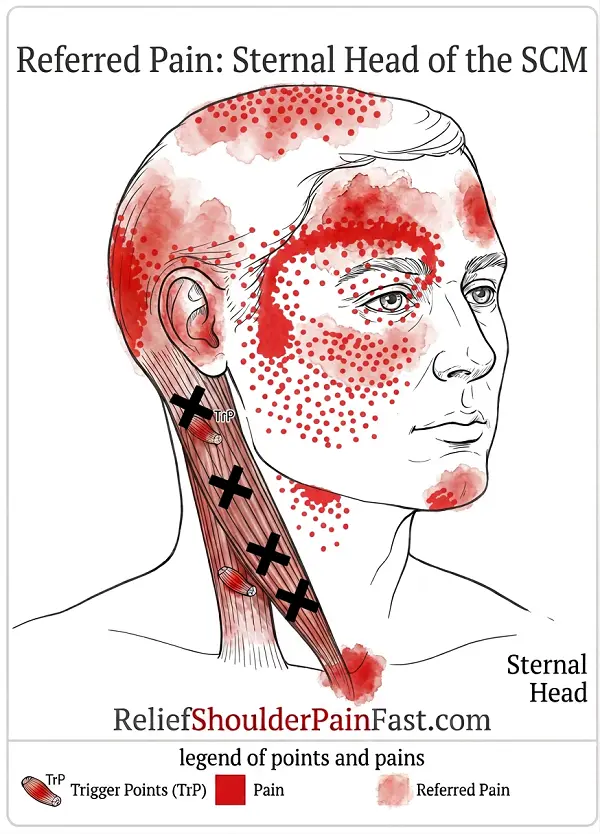
Read the Upper trapezius guideWhere it is: The prominent muscle running from behind the ear to the breastbone and collarbone.
SCM referral patterns can include the forehead, around the eye, and parts of the face. These patterns overlap with other causes of head pain.
A practical starting point: Use the precautions in the full SCM guide. Never press deeply into the front or side of the neck or over a pulse.
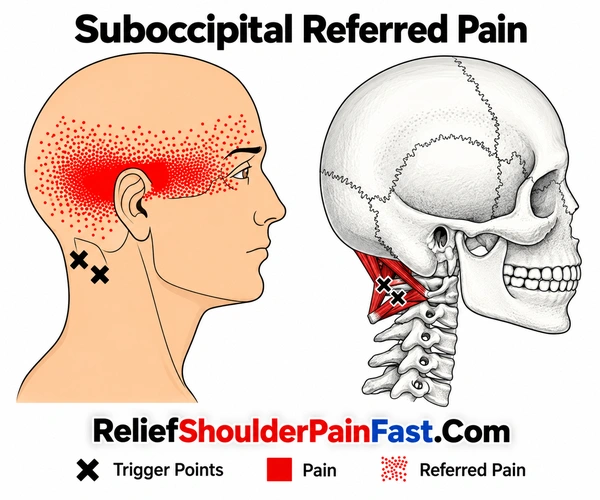
Read the Sternocleidomastoid (SCM) guideWhere it is: A small group of deep muscles beneath the back of the skull.
These muscles help control head position. Research describes head pain referral from this group, including pain perceived toward the forehead or behind the eyes.
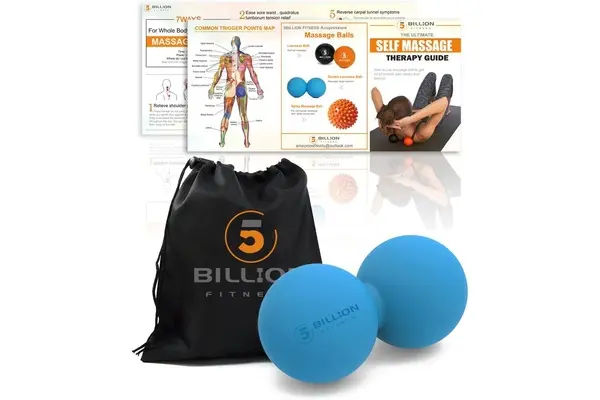
This is the tool I use in the suboccipital self-massage video above.
View Peanut Massage Ball on AmazonAffiliate link: I may earn a commission at no extra cost to you.
A practical starting point: Take breaks from holding your head in one position. Avoid hard tools, forceful pressure, or aggressive neck manipulation.
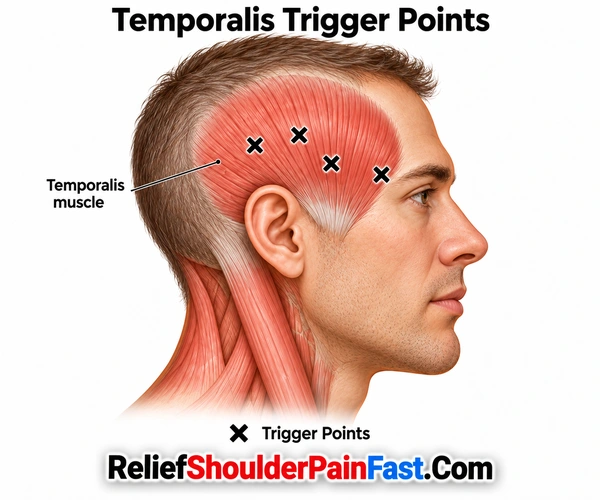
Where it is: The fan-shaped chewing muscle over each temple, above the ear.
The temporalis is a useful muscle to discuss when temple discomfort occurs alongside jaw tension. A headache that changes with chewing or clenching deserves assessment for a jaw-related problem.
A practical starting point: Notice daytime clenching. Let your jaw rest comfortably instead of holding your teeth together.
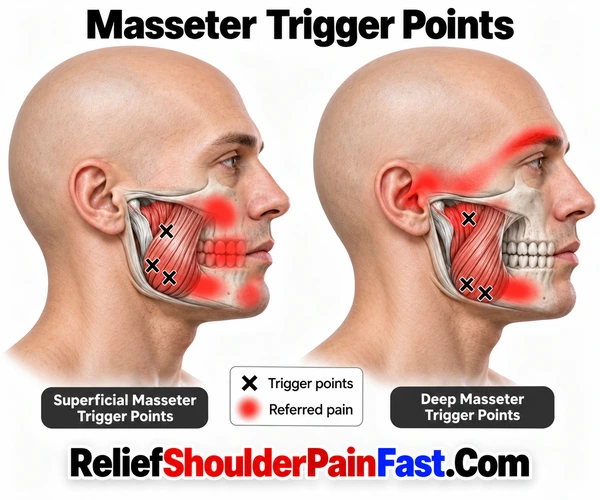
Video demonstration coming soonWhere it is: The strong chewing muscle on the side of the jaw, between the cheekbone and jaw angle.
Jaw-muscle problems can cause discomfort in the face and may occur with headache. Pain in the jaw, cheek, or near the ear should also be considered in the context of dental and jaw-joint conditions.
A practical starting point: Avoid repeatedly testing a painful jaw by clenching. Persistent jaw pain, locking, or dental pain should be assessed by a dentist or clinician.
Video demonstration coming soonBegin by noticing habits: prolonged screen time, raised shoulders, or holding your teeth together. Comfortable changes in position, regular breaks, and a supported work setup may make it easier to relax. For jaw discomfort, avoid gum chewing and other habits that aggravate symptoms.
Self-massage should be comfortable and gentle. Avoid pressure on the eyes, throat, pulse points, or painful swollen areas. Stop if you develop dizziness, numbness, visual changes, or increased head pain. Use the detailed muscle guides for precautions, and ask a qualified clinician if you are unsure.
The existing SCM and trapezius guides are linked above. Demonstrations for the suboccipitals, temporalis, and masseter will be added here as they become available.
Visit my YouTube channelA simple diary can help you discuss symptoms with your healthcare professional. Record when the pain begins, its location and duration, associated symptoms, and whether chewing, neck movement, or particular activities change it. Include medication use and what helps.
I hope you find this information useful.
Thank you for reading,
Michel Bourgeois
Licensed Massage Therapist