The Trapezius
The Trapezius Muscle: Trigger Points and Referred Pain
Where Is the Trapezius Located?
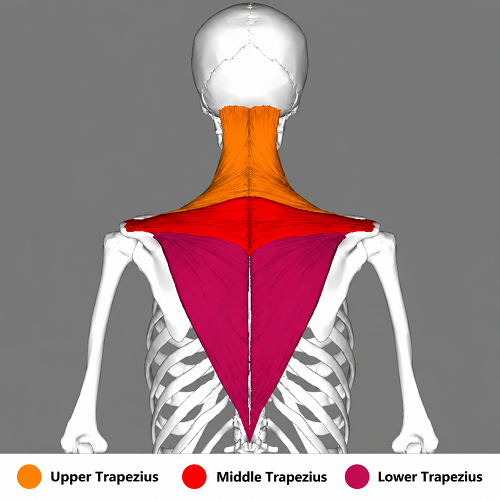
About the Trapezius
The trapezius is a large, superficial muscle covering much of the back of the neck, shoulders, and upper back. Its upper, middle, and lower fibers work together to move and stabilize the shoulder blade.
The upper fibers help elevate and upwardly rotate the shoulder blade, the middle fibers draw it toward the spine, and the lower fibers help depress and upwardly rotate it. The trapezius also assists with movements of the neck and head.
Trapezius Referred Pain and Related Symptoms
Tender points in different parts of the trapezius may be associated with discomfort in the neck, top of the shoulder, upper back, or around the shoulder blade. Some people also notice head discomfort, although these patterns cannot identify the cause by themselves.
- Aching or tightness along the top of the shoulder.
- Neck stiffness or discomfort when turning or tilting the head.
- Discomfort between the shoulder blades or along the upper back.
- Muscle tenderness, tight bands, spasms, or a heavy feeling in the shoulder.
- Headache that may begin near the upper neck.
- Symptoms that become more noticeable during prolonged sitting, carrying, or overhead activity.
These symptoms may resemble those associated with the Levator Scapula rhomboids, cervical joints, shoulder joints, or irritated nerves. A referred-pain pattern may provide a clue, but it cannot confirm that the trapezius is responsible.
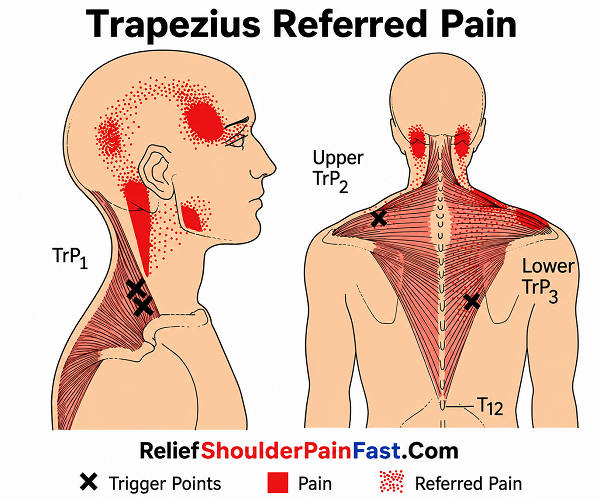
The image above shows possible locations of trapezius trigger points and referred discomfort.
What May Contribute to Trapezius Trigger Points?
- Prolonged sitting with the head forward or shoulders raised.
- Working for long periods at a computer or looking down at a phone.
- Carrying a heavy bag on one shoulder.
- Repeated overhead reaching, lifting, pulling, or throwing.
- Holding the arms unsupported for extended periods.
- Stress-related shoulder tightening or jaw clenching.
- A sudden increase in exercise, manual work, or upper-body activity.
- Insufficient rest between demanding activities.
How to Help Prevent Trapezius Trigger Points from Returning
- Keep screens near eye level and support your forearms while working.
- Take regular movement breaks from prolonged sitting or repetitive tasks.
- Let your shoulders rest comfortably instead of holding them raised.
- Use both shoulder straps for a backpack and reduce unnecessarily heavy loads.
- Increase exercise and overhead activity gradually.
- Warm up before demanding lifting, pulling, or throwing activities.
- Use relaxed breathing and notice when stress causes you to tighten your shoulders.
- Allow adequate recovery after strenuous activity.
Pay attention to the activities and positions that repeatedly bring back your symptoms. Adjusting the aggravating movement may be as important as massaging a tender area.
Trapezius Self-Massage
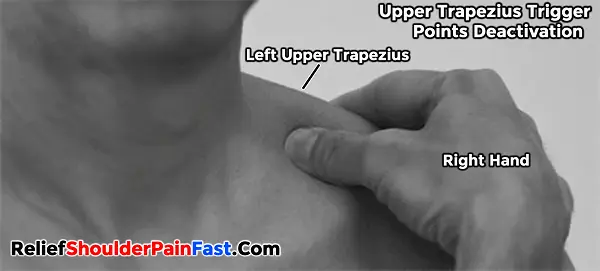
Gentle self-massage may help reduce muscular tension and tenderness in accessible areas of the trapezius.
Technique 1

Technique 2

Technique 3
Trapezius Massage Instructions
Relax your shoulders and use the fingertips or supported thumb of the opposite hand to gently explore the soft tissue across the top of the shoulder. For areas that are difficult to reach, you may use a tennis ball against a wall or a massage cane with light, controlled pressure.
When you find a tender muscular area, apply comfortable pressure for a few seconds, then use small, slow movements. Keep breathing normally and reduce the pressure if you begin to tense or hold your breath.
Use caution: Do not press directly on the spine, collarbone, shoulder blade, front or side of the neck, or any area where you feel a pulse. Stop immediately if massage causes sharp pain, dizziness, headache, numbness, tingling, weakness, nausea, or symptoms traveling down the arm.
Sources and References
- Clair Davies and Amber Davies. The Trigger Point Therapy Workbook: Your Self-Treatment Guide for Pain Relief. New Harbinger Publications, 2013.
- Anatomy, Back, Trapezius — National Library of Medicine.
- Trapezius Muscle: Anatomy and Function — Cleveland Clinic.