The Levator Scapulae
The Levator Scapulae Muscle: Trigger Points and Referred Pain
Where Is the Levator Scapulae Located?
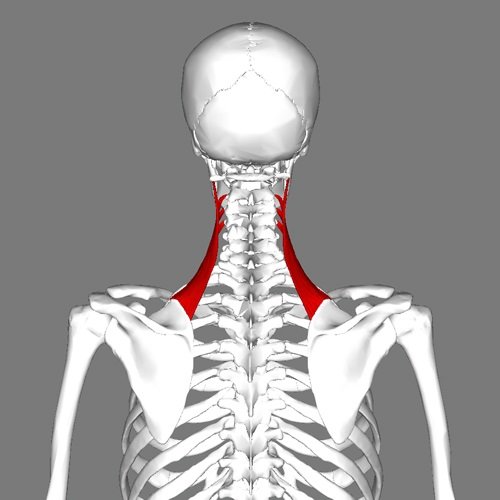
About the Levator Scapulae
The levator scapulae is a paired muscle running from the upper cervical vertebrae to the upper inner corner of the shoulder blade. Much of it lies beneath the trapezius muscles.
Its primary role is to elevate the shoulder blade. It also assists with downward rotation of the shoulder blade and with extending, rotating, and bending the neck toward the same side.
Levator Scapulae Referred Pain and Related Symptoms
Tender points in the levator scapulae may be associated with discomfort along the side or back of the neck, at the upper inner corner of the shoulder blade, and across the top of the shoulder.
- A stiff or painful neck, especially when turning the head.
- Aching along the side of the neck or at its base.
- Tenderness at the upper inner corner of the shoulder blade.
- Discomfort that may spread toward the top or back of the shoulder.
- Difficulty looking over the shoulder comfortably.
- A feeling that one shoulder is being held higher than the other.
These symptoms may resemble those associated with the upper trapezius, rhomboids, cervical joints, or irritated nerves. A referred-pain pattern may provide a useful clue, but it cannot confirm the cause of pain.
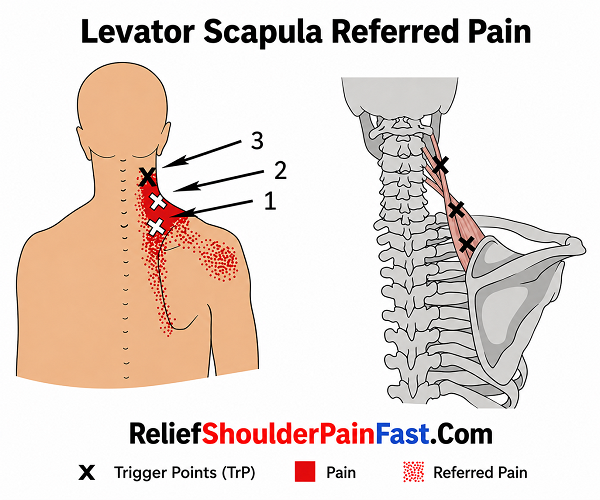
The image above shows possible locations of levator scapulae trigger points and referred discomfort.
What May Contribute to Levator Scapulae Trigger Points?
- Working with the head turned or tilted for long periods.
- Looking down frequently at a phone, tablet, or work surface.
- Holding a telephone between the shoulder and ear.
- Carrying a heavy bag on one shoulder.
- Sleeping with the neck twisted or without comfortable support.
- Repeated overhead reaching or lifting.
- Stress-related shoulder elevation or muscle tightening.
- A sudden strain, awkward movement, or rapid increase in activity.
How to Help Prevent Levator Scapulae Trigger Points from Returning
- Keep screens near eye level and avoid prolonged downward viewing.
- Turn your whole body instead of holding your neck rotated for long periods.
- Use a headset rather than supporting a telephone with your shoulder.
- Take regular movement breaks during computer work, driving, or reading.
- Use both backpack straps and reduce unnecessarily heavy loads.
- Choose a pillow that keeps your neck in a comfortable, neutral position.
- Increase lifting and overhead activity gradually.
- Notice when stress makes you raise or tighten your shoulders.
Pay attention to activities or positions that repeatedly bring back your symptoms. Reducing or modifying the aggravating movement may be as important as massaging the tender area.
Levator Scapulae Self-Massage
Gentle self-massage may help reduce tension and tenderness in accessible areas of the levator scapulae.
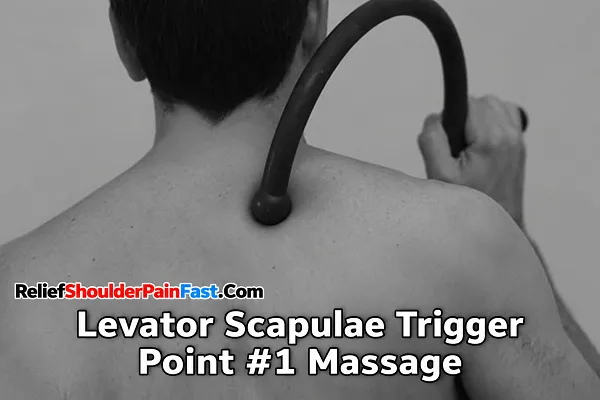
Technique 1
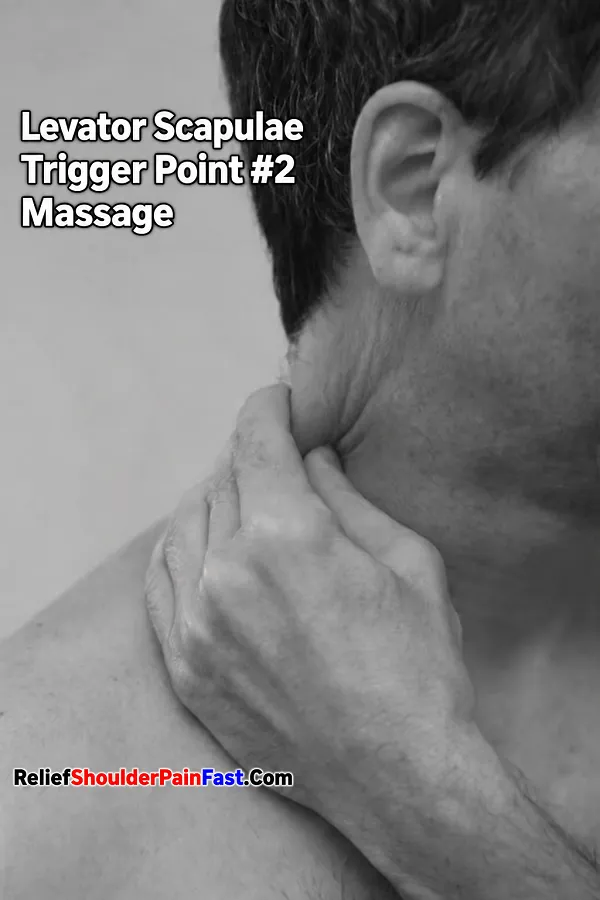
Technique 2
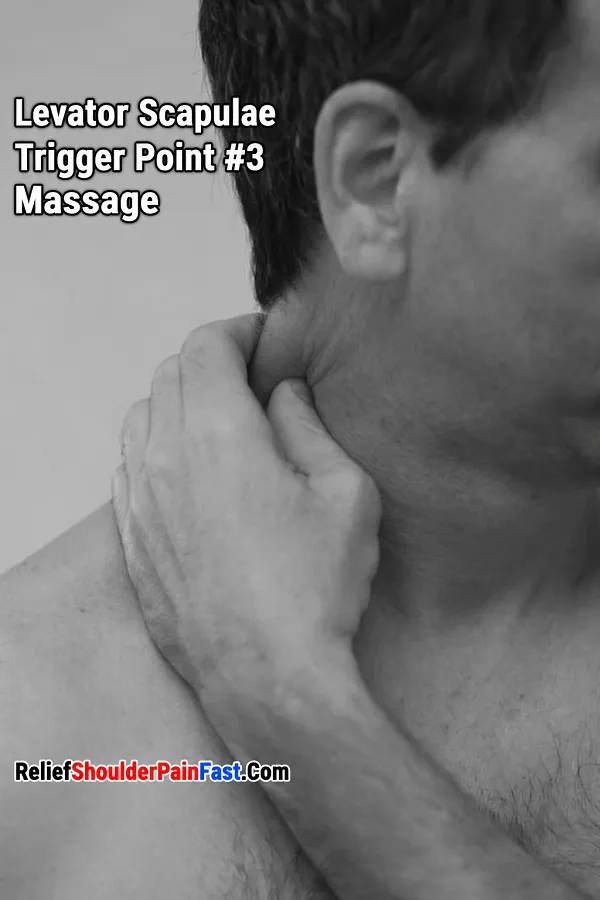
Technique 3
Levator Scapulae Massage Instructions
Relax your shoulders and gently turn your head slightly away from the side you want to treat. With the fingertips or supported thumb of the opposite hand, explore the muscular area from the upper inner corner of the shoulder blade toward the side and back of the neck.
When you locate a tender muscular area, use comfortable pressure for a few seconds and then make small, slow movements. A massage cane or tennis ball against a wall may help you reach the area near the shoulder blade while keeping the pressure controlled.
Use caution: Do not press directly on the cervical spine, shoulder blade, collarbone, front or side of the neck, or any area where you feel a pulse. Stop immediately if massage causes sharp pain, dizziness, headache, nausea, numbness, tingling, weakness, or symptoms traveling down the arm.
Sources and References
- Clair Davies and Amber Davies. The Trigger Point Therapy Workbook: Your Self-Treatment Guide for Pain Relief. New Harbinger Publications, 2013.
- Anatomy, Head and Neck, Levator Scapulae Muscles — National Library of Medicine.
- Cervical Spine Anatomy — Cleveland Clinic.
I hope you find this information helpful.
Thank you for reading,
Michel Bourgeois
Licensed Massage Therapist
This article is provided for educational purposes only and does not constitute medical advice, a diagnosis, or treatment.