The Triceps Brachii
The Triceps Brachii Muscle: Trigger Points and Referred Pain
Where Is the Triceps Brachii Located?
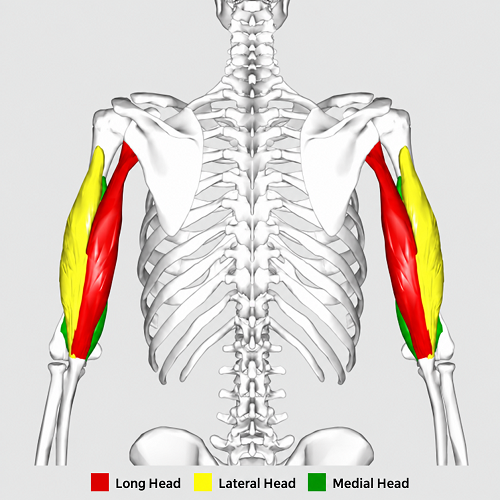
By Anatomography (en:Anatomography (setting page of this image)) [CC BY-SA 2.1 jp], via Wikimedia Commons
About the Triceps Brachii
The triceps brachii is the large muscle at the back of the upper arm. It has three portions—the long, lateral, and medial heads—that work together primarily to straighten the elbow. The long head also assists with movement and stability at the shoulder.
Trigger points may develop when the triceps is repeatedly overloaded during pushing, throwing, lifting, or activities that require forceful elbow straightening. Different areas of the muscle may produce somewhat different referred-pain patterns.
Triceps Brachii Referred Pain and Related Symptoms
Trigger points in the triceps brachii may refer discomfort to the back of the shoulder, the back of the upper arm, or around the elbow. In some people, discomfort may extend into the back of the forearm or toward the fourth and fifth fingers.
- Tenderness or aching in the back of the upper arm.
- Discomfort in the back of the shoulder.
- Pain around the point or outer side of the elbow.
- Discomfort that may extend down the back of the forearm.
- Pain or fatigue when pushing or straightening the elbow.
These symptoms may resemble those associated with the shoulder joint, rotator cuff, triceps tendon, tennis elbow, golfer's elbow, or irritated nerves. A referred-pain pattern can provide a useful clue, but it cannot confirm the cause of pain.
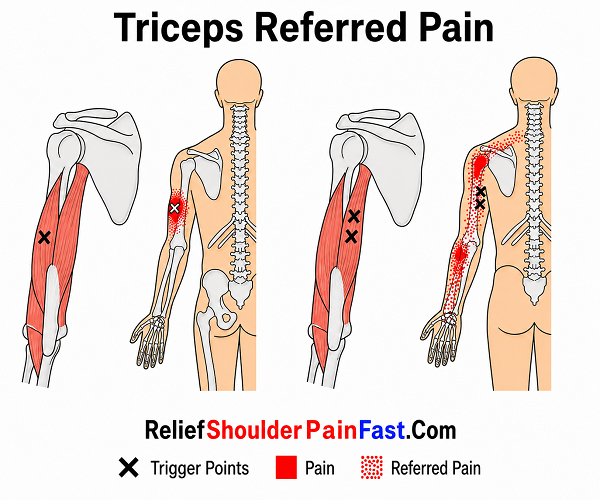
The image above shows possible locations of triceps brachii trigger points and referred discomfort.
What May Contribute to Triceps Brachii Trigger Points?
- Repeated pushing, throwing, or forceful elbow straightening.
- Strength exercises such as dips, push-ups, or triceps extensions.
- Supporting body weight through the arms for long periods.
- Repetitive overhead work or sports.
- A sudden increase in shoulder exercise or activity.
- Insufficient recovery between demanding activities.
How to Help Prevent Triceps Brachii Trigger Points from Returning
- Increase pushing, throwing, and arm exercise gradually.
- Take breaks from repetitive pushing or overhead movements.
- Keep loads close to your body when lifting or carrying.
- Use comfortable shoulder positioning during work and exercise.
- Warm up before demanding shoulder activity.
- Allow enough recovery time between demanding activities.
Pay attention to activities or positions that repeatedly bring back your symptoms. Reducing or modifying the aggravating movement may be as important as massaging the tender area.
Triceps Brachii Self-Massage
Gentle self-massage may help reduce tension and tenderness in the triceps brachii.
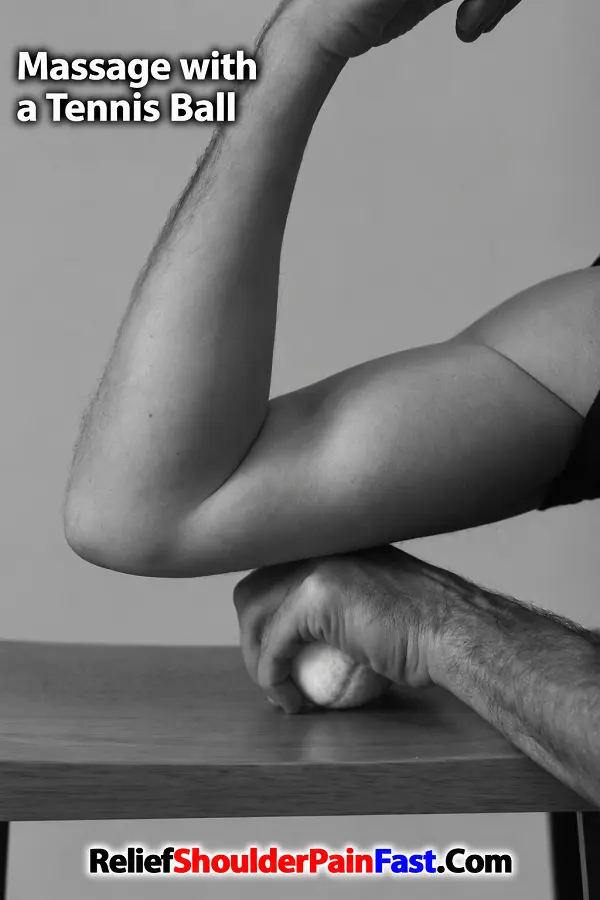
1. Massage With a Tennis Ball
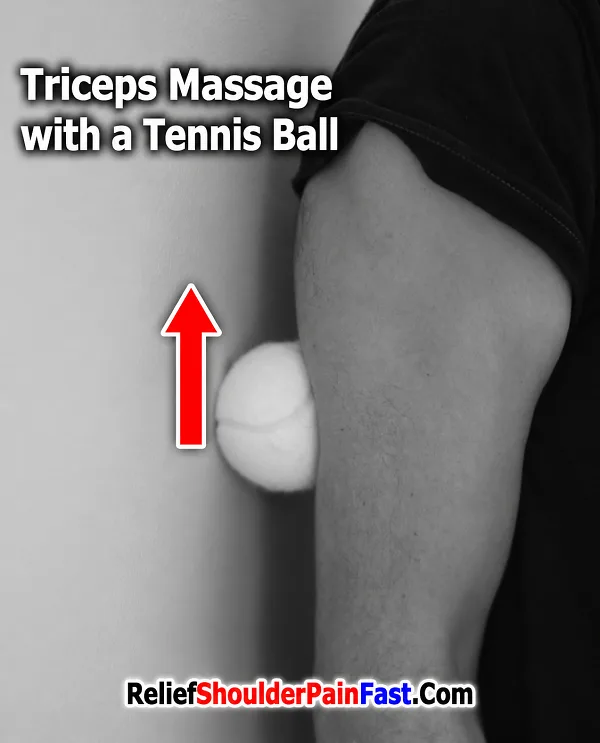
2. Massage With a Tennis Ball
Triceps Brachii Massage Instructions
Picture 1 — Using a tennis ball: Place a tennis ball or massage ball on a firm surface, such as a table. To massage your right triceps, hold the ball in place with your left hand and rest your right triceps on top of it, as shown above. Slowly apply comfortable downward pressure while gently bending and straightening your right elbow. Move the ball to different tender areas as needed.
Picture 2 — Using a tennis ball: Place a tennis ball or massage ball between the back of your upper arm and a wall. Lean into the ball gently and move slowly until you locate a tender area. You can either hold steady pressure on a tender area or make small, slow movements up and down. Keep the pressure comfortable and avoid rolling directly over the elbow joint. The Triceps muscle and the Posterior Deltoid are close together in this area, so this technique may allow you to massage both muscles at the same time.
Use caution: Do not press directly on the elbow, upper-arm bone, or deeply into the armpit. Avoid aggressive pressure. Stop immediately if the massage causes sharp pain, numbness, tingling, weakness, bruising, or discomfort traveling down the arm.
Sources and References
- Clair Davies and Amber Davies. The Trigger Point Therapy Workbook: Your Self-Treatment Guide for Pain Relief. New Harbinger Publications, 2013.
- Anatomy, Shoulder and Upper Limb, Triceps Muscle — NCBI Bookshelf.
- An Overlooked Cause of Upper-Extremity Pain: Myofascial Trigger Points of the Triceps Muscle — National Library of Medicine.