The Serratus Posterior Superior
Serratus Posterior Superior Trigger Points and Referred Pain
Where Is the Serratus Posterior Superior Located?
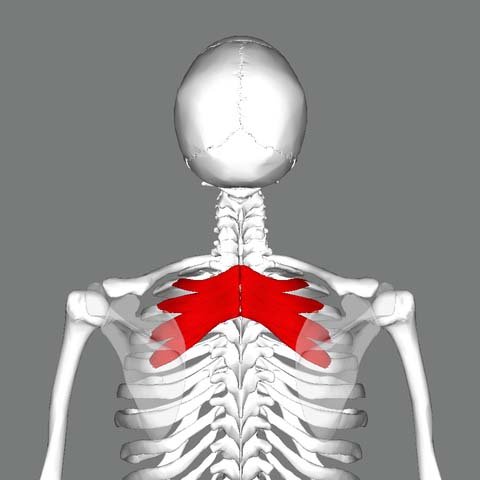
About the Serratus Posterior Superior
The Serratus Posterior Superior is a thin muscle located deep in the upper back, underneath the rhomboid muscles. It runs from the lower neck and upper thoracic spine to the second through fifth ribs.
It helps elevate the upper ribs during inhalation and may also assist with sensing and stabilizing movement in the upper back and rib cage. Repeated forceful breathing, coughing, or prolonged positions that keep the shoulders raised and rounded may overload this muscle.
Serratus Posterior Superior Referred Pain and Related Symptoms
Trigger points in the Serratus Posterior Superior may cause a deep ache beneath the upper part of the shoulder blade. Discomfort may spread across the back of the shoulder and down the arm.
- A deep ache beneath or near the upper shoulder blade.
- Pain across the back of the shoulder.
- Discomfort that may travel down the back or inner side of the arm.
- Aching near the elbow, forearm, wrist, or hand.
- Tenderness that may be more noticeable when lying on the affected side or back.
These symptoms may resemble discomfort associated with the rhomboids, infraspinatus, scalenes, ribs, thoracic spine, or irritated nerves. A referred-pain pattern may provide a useful clue, but it cannot confirm the cause of shoulder, arm, chest, or upper-back pain.
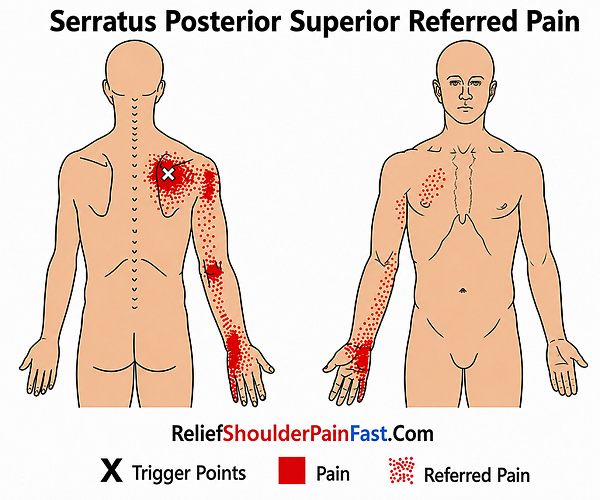
The image above shows possible Serratus Posterior Superior trigger points and referred discomfort.
What May Contribute to Serratus Posterior Superior Trigger Points?
- Repeated or prolonged coughing.
- Labored breathing or excessive upper-chest breathing.
- Sitting for long periods with the shoulders raised and rounded forward.
- Working at a desk or counter that is too high.
- Repeatedly reaching forward or backward at shoulder height.
- A sudden increase in upper-body work or exercise.
How to Help Prevent Serratus Posterior Superior Trigger Points from Returning
- Adjust your work surface so your shoulders can remain relaxed.
- Change position regularly during prolonged sitting or desk work.
- Keep frequently used objects within a comfortable reach.
- Increase upper-body exercise and repetitive work gradually.
- Practice relaxed breathing without unnecessarily lifting the shoulders.
- Allow enough recovery time after strenuous activity or prolonged coughing.
Reducing or modifying the aggravating activity may be as important as massaging the tender area.
Serratus Posterior Superior Self-Massage
Gentle self-massage may help reduce tension and tenderness around the Serratus Posterior Superior.
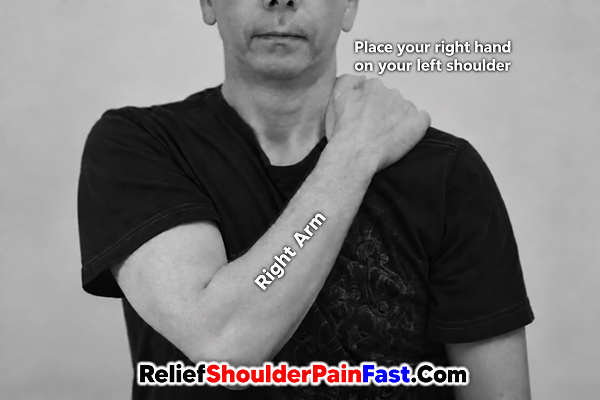
Picture 1 — Starting position
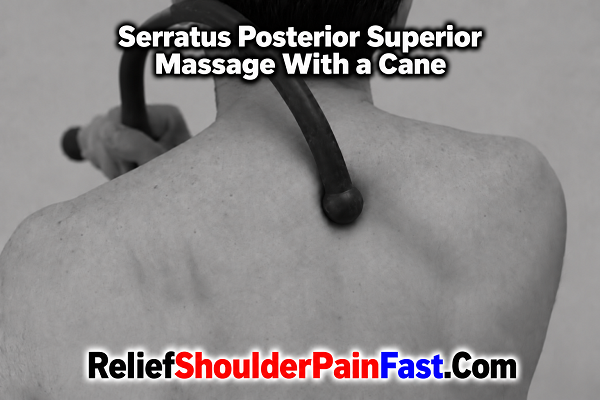
Picture 2 — Massage With a Cane
Serratus Posterior Superior Massage Instructions
Picture 1 — Starting position: Trigger points in this muscle are accessible only when you move the shoulder blade away from the spine. To do this, place the arm on the side being treated across your chest and rest your hand on the opposite shoulder. This position moves the shoulder blade away from the trigger points underneath it, making them easier to reach. You can then massage the muscle using a tennis ball or a massage cane. This muscle is underneath the rhomboid muscles, so this technique may allow you to massage both muscles at the same time.
Picture 2 — Use a tennis ball or massage cane: Place a tennis ball between the wall and the muscular area beside the upper spine. Lean into the ball gently and move slowly until you locate a tender spot. Hold comfortable pressure for 5 to 10 seconds, release, and repeat as needed.
Use caution: Do not press directly on the spine, shoulder blade, or ribs. Because this muscle is deep, avoid forceful pressure. Stop if the massage causes sharp pain, numbness, tingling, weakness, dizziness, chest pain, or breathing difficulty.
Sources and References
- Simons, Travell and Simons. Travell & Simons' Myofascial Pain and Dysfunction: The Trigger Point Manual, Volume 1. Lippincott Williams & Wilkins, 1999.
- Anatomy, Thorax, Muscles — NCBI Bookshelf.
- Anatomy, Back, Extrinsic Muscles — NCBI Bookshelf.
I hope you find this information helpful.
Thank you for reading,
Michel Bourgeois
Licensed Massage Therapist
This article is provided for educational purposes only and does not constitute medical advice, a diagnosis, or treatment.