The Rhomboid Muscles
The Rhomboid Major and Minor: Trigger Points and Referred Pain
Where Are the Rhomboid Muscles Located?
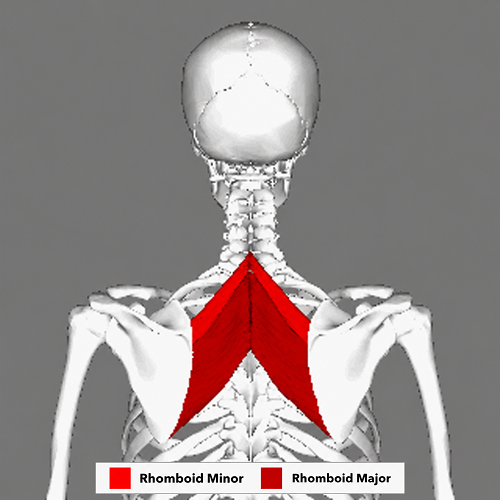
By Anatomography (en:Anatomography (setting page of this image)) [CC BY-SA 2.1 jp], via Wikimedia Commons
About the Rhomboid Muscles
The rhomboids consist of two muscles—the Rhomboid Major and Rhomboid Minor. They are located between the spine and the inner border of the shoulder blade, underneath the trapezius.
The rhomboids help draw the shoulder blade toward the spine, assist with downward rotation, and hold the shoulder blade against the rib cage. They work during pulling, rowing, carrying, and many movements that stabilize the shoulder.
Rhomboid Referred Pain and Related Symptoms
Trigger points in the rhomboids may cause aching or tenderness along the inner border of the shoulder blade. Discomfort may feel deep and difficult to reach and may spread across a small area of the upper or middle back.
- Aching between the spine and the shoulder blade.
- Tenderness along the inner border of the shoulder blade.
- Discomfort during pulling or rowing movements.
- Pain after sitting with the shoulders rounded forward.
- A feeling of tightness or fatigue in the upper back.
These symptoms may resemble those associated with the trapezius, levator scapulae, ribs, spinal joints, or irritated nerves. A referred-pain pattern may provide a useful clue, but it cannot confirm the cause of upper-back or shoulder-blade pain.
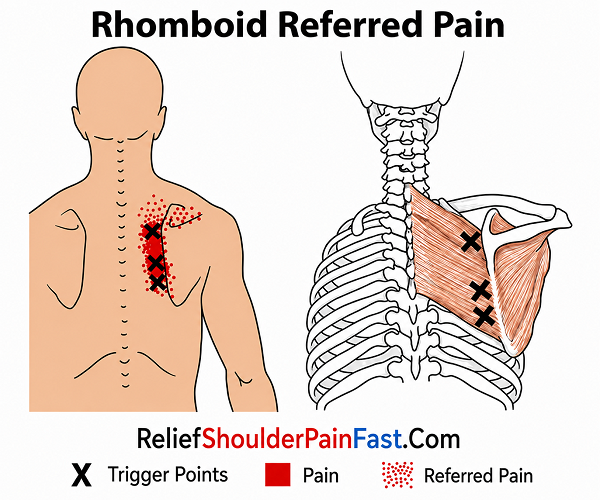
The image above shows possible rhomboid trigger points and referred discomfort.
What May Contribute to Rhomboid Trigger Points?
- Long periods of sitting with the shoulders rounded forward.
- Repeated pulling, rowing, or lifting movements.
- Carrying a heavy bag or load on one side.
- Working for long periods with the arms extended forward.
- A sudden increase in upper-body exercise or manual activity.
- Insufficient recovery between demanding activities.
How to Help Prevent Rhomboid Trigger Points from Returning
- Change position regularly during prolonged sitting or computer work.
- Keep frequently used objects within comfortable reach.
- Increase pulling and upper-body exercise gradually.
- Divide carried weight evenly when possible.
- Warm up before demanding upper-body activity.
- Allow enough recovery time between strenuous activities.
Reducing or modifying the aggravating activity may be as important as massaging the tender area.
Rhomboid Self-Massage
Gentle self-massage may help reduce tension and tenderness around the rhomboid muscles.
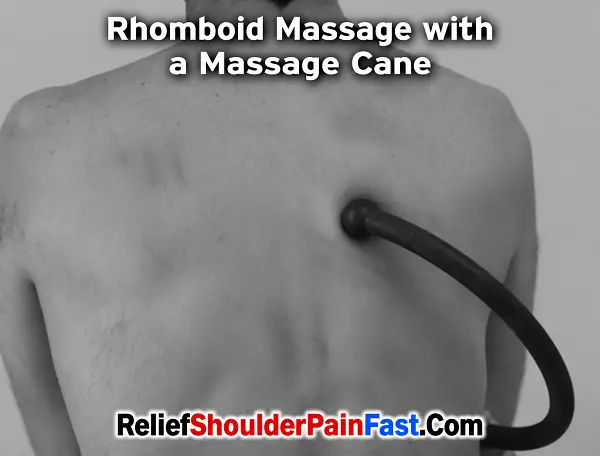
Rhomboid Massage With a Massage Cane
Rhomboid Massage Instructions
Treating the Right Rhomboids with a Massage Cane: Place tip No. 1 directly on the rhomboid trigger point and apply steady, static pressure for 5–10 seconds. Then massage the area for 30–60 seconds. Repeat four to six times per day. Your arm position will be the same as when treating the lower trapezius. You can also use a tennis ball in the same way.
Use caution: Do not roll directly over the spine, shoulder blade, or ribs, and do not use forceful pressure. Stop if the massage causes sharp pain, numbness, tingling, weakness, dizziness, or breathing difficulty.
Sources and References
- Clair Davies and Amber Davies. The Trigger Point Therapy Workbook: Your Self-Treatment Guide for Pain Relief. New Harbinger Publications, 2013.
- Anatomy, Back, Rhomboid Muscles — NCBI Bookshelf.
- Anatomy, Back, Extrinsic Muscles — NCBI Bookshelf.
I hope you find this information helpful.
Thank you for reading,
Michel Bourgeois
Licensed Massage Therapist
This article is provided for educational purposes only and does not constitute medical advice, a diagnosis, or treatment.