
Understanding Fibromyalgia
Fibromyalgia is a real, long-term condition that can cause widespread pain, fatigue, unrefreshing sleep, and difficulty concentrating, sometimes called “fibro fog.” Research points to changes in how the nervous system processes pain. Its causes are not yet fully understood. [1]
Years ago, I wrote a French article about the similarities I noticed between fibromyalgia and myofascial pain. At that time, I worked in a rehabilitation setting alongside chiropractors and physical therapists. Working with people who had been diagnosed with fibromyalgia encouraged me to learn more about the muscular component of their discomfort.
Fibromyalgia and myofascial pain syndrome can overlap, but they are not interchangeable diagnoses. Myofascial pain commonly involves painful muscular areas and trigger points that can produce local or referred pain. A person may have both conditions, and treating one source of pain does not necessarily resolve the other. [4]
My Own Experience with Muscular Pain
Let me explain. In 2000, before I became a massage therapist, I was working as an X-ray technician. I experienced pain and muscular fatigue across the back of my shoulders, and I often felt tired.
After two weeks of taking a muscle relaxant, I still felt tired and had a constant sense of pressure across my shoulders. I was becoming discouraged. Following a visit to my chiropractor, who practices Applied Kinesiology, my shoulder pain went away after an adjustment and trigger-point treatment.
This was my personal experience with shoulder pain; I was not diagnosed with fibromyalgia. It later reminded me how much muscular discomfort can affect someone’s daily life.
A Client’s Experience Early in My Practice
Around 2009–2010, shortly after I graduated from massage therapy school, a woman called to ask if I could help relieve her pain. She told me that her family doctor had diagnosed her with fibromyalgia more than ten years earlier.
When we met two days later, she described headaches and migraines, jaw pain, muscular fatigue, difficulty sleeping, and pain throughout her body.
Over five sessions spread across four months, she reported significant improvement. After the first session, she told me she had slept through the night—something she had not done in a long time. She said her discomfort continued to lessen with subsequent connective-tissue massage sessions.
Fibromyalgia, Myofascial Pain—or Both?
In my original article, I asked whether someone might have fibromyalgia or myofascial pain. Today, I would also ask: Could both be contributing to the person’s symptoms?
Painful muscles, headaches, stiffness, and disturbed sleep can occur in overlapping pain conditions. Trigger points are associated with myofascial pain; they are not a required feature of fibromyalgia. A qualified healthcare professional can assess symptoms, look for other causes, and consider conditions that may coexist. [2] [4]
What Happened to the 18 Tender Points?
Older fibromyalgia classification criteria used widespread pain lasting at least three months together with tenderness at 11 or more of 18 specified examination sites. Those sites were tender points, not trigger points. A tender point is sensitive when pressed; a myofascial trigger point is clinically associated with a sensitive area in muscle that may reproduce local or referred pain.
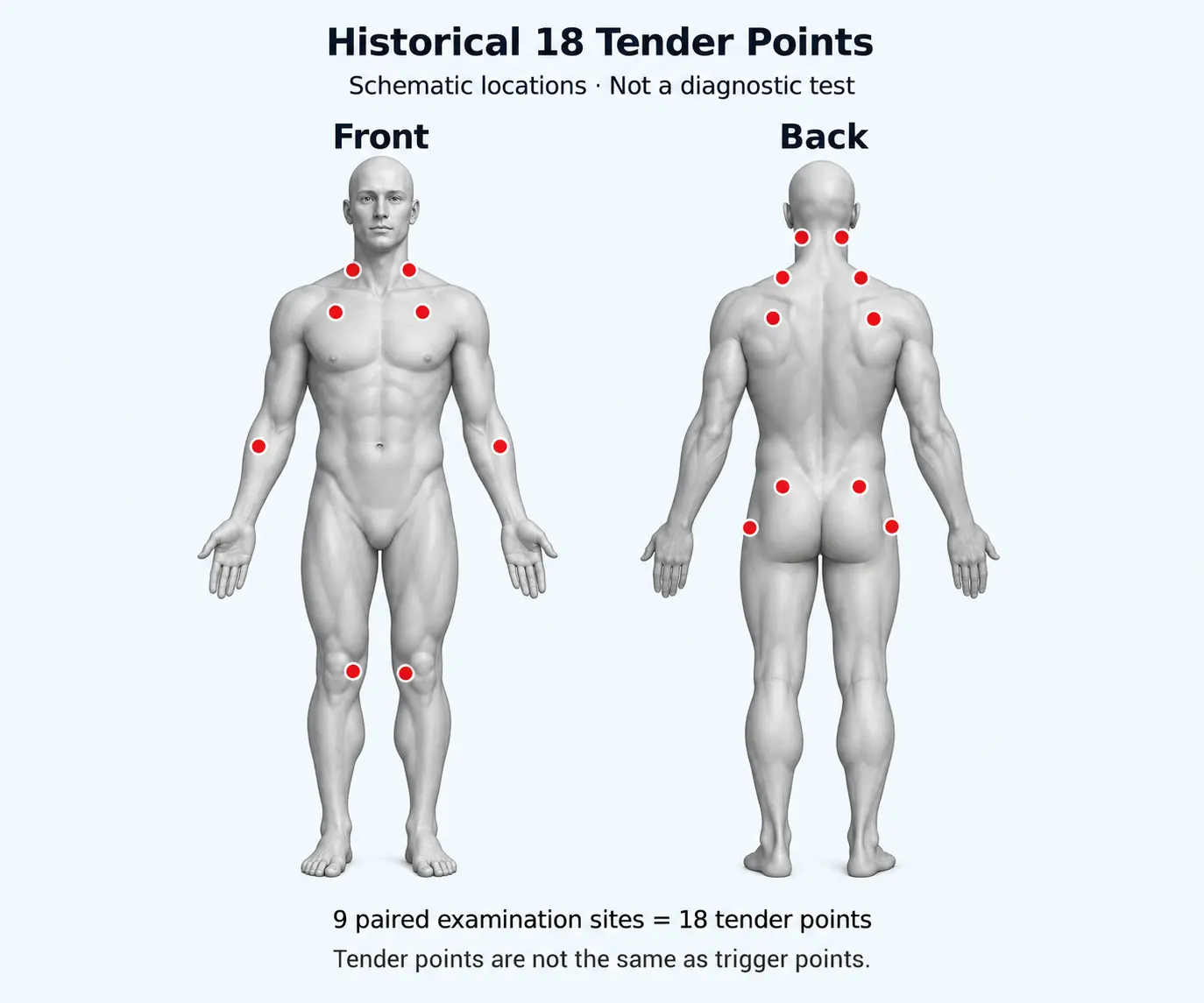
Current diagnostic approaches assess the distribution and duration of pain along with symptoms such as fatigue, unrefreshing sleep, and cognitive difficulties. The old 11-of-18 tender-point examination is no longer required. No single blood test or scan confirms fibromyalgia, although clinicians may order tests to investigate other possible causes. [2] [5]
Can Massage and Myofascial Release Help?
In my practice, I have seen some clients report relief after gentle connective-tissue work and carefully adapted trigger-point treatment. These observations have shaped my interest in the relationship between muscles, fascia, and persistent pain.
Research suggests massage and myofascial release may provide modest improvements in some fibromyalgia symptoms, but the evidence is limited and results vary. They are supportive options, rather than a cure or a replacement for medical care. [3]
Fascia is connective tissue surrounding and supporting muscles and other structures. “Myofascial release” describes hands-on techniques directed at these tissues; feeling better afterward does not establish that fascia was physically “unstuck” or that it caused the underlying condition.
- Begin with gentle pressure and short sessions.
- Tell your therapist about sensitivity, fatigue, and previous flare-ups.
- Avoid the idea that treatment must hurt to work. Reduce or stop pressure that causes pain or a flare.
- Combine hands-on care, when helpful, with a personalized plan that may include gradually paced movement, sleep support, and medical treatment.
How My Training Has Added Tools to My Practice
When I worked with that client early in my career, I had not yet trained in Energy Kinesiology. Since then, I have become certified in Energy Kinesiology and Biochemical Kinesiology, including muscle-testing approaches. This training has given me additional tools in my practice and broadened how I approach my work with clients.
I distinguish these complementary approaches from medical diagnosis. Energy Kinesiology muscle testing is not an established method for diagnosing fibromyalgia, food sensitivities, allergies, or nutritional deficiencies. Suspected food-related symptoms should be evaluated with an appropriately qualified healthcare professional rather than used as a reason for broad food restrictions. [6]
A Book I Have Valued Since 2013
I bought Healing through Trigger Point Therapy: A Guide to Fibromyalgia, Myofascial Pain and Dysfunction in 2013. Written by Devin J. Starlanyl and John Sharkey, it explores the relationship between fibromyalgia and myofascial pain. I found it an excellent resource for thinking about the muscular pain that may accompany fibromyalgia.
This is my personal recommendation. The book offers an author perspective and practical discussion; it should be read alongside current medical guidance rather than used to diagnose yourself or assume that every symptom comes from trigger points.

As an Amazon Associate I earn from qualifying purchases.
Finding a Plan That Fits You
If you have widespread pain and fatigue, seek an assessment rather than trying to decide between diagnoses on your own. If you already have fibromyalgia, ask whether coexisting muscular pain could also be addressed. New or changing symptoms deserve medical attention rather than automatically being attributed to fibromyalgia.
My goal is to help people feel heard and find tolerable ways to improve comfort. Your response to treatment matters, and a helpful approach should be adapted to your needs.
Sources and Further Reading
- NIAMS: Fibromyalgia—Symptoms and Causes
- NIAMS: Diagnosis, Treatment, and Steps to Take
- NCCIH: Mind and Body Practices for Fibromyalgia—What the Science Says
- Effects of Treatment of Myofascial Trigger Points on the Pain of Fibromyalgia (2011)
- American Family Physician: Fibromyalgia—Diagnosis and Management (2023)
- AAAAI: Allergy Testing and Unproven Tests
- Starlanyl, D. J., and Sharkey, J. Healing through Trigger Point Therapy: A Guide to Fibromyalgia, Myofascial Pain and Dysfunction. North Atlantic Books, 2013.
I hope you found this information useful. Thank you for reading!
Michel Bourgeois, Licensed Massage Therapist
Certified in Energy Kinesiology and Biochemical Kinesiology
This article shares general educational information and personal professional observations. It is not medical advice, diagnosis, or a promise of treatment results.