Gluteus Maximus
The largest and most superficial muscle of the group gives the buttocks much of their shape. It extends the hip and helps generate power when rising, climbing, or running.

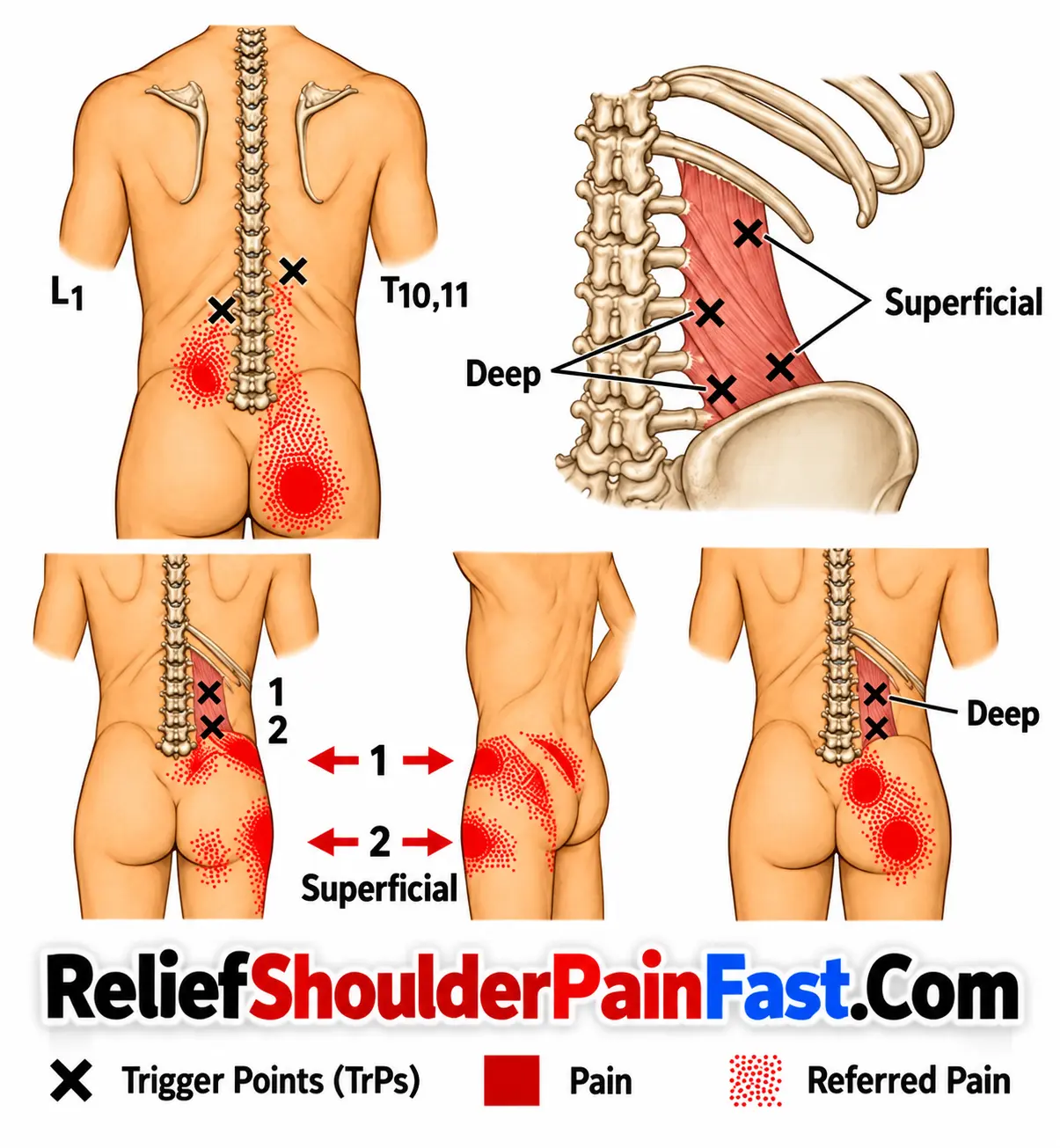
The quadratus lumborum (QL) is one of the muscles that may contribute to lower back pain. Tender areas or trigger points in this muscle may produce a deep, aching discomfort in the lower back, sometimes with pain felt around the buttock or hip.
Muscular referred pain can resemble some symptoms associated with sciatica, but it is not the same as pain caused by irritation or compression of a nerve. Lower back pain has several possible causes, so symptoms alone cannot confirm that the QL is responsible. Read more about sciatica and piriformis syndrome.
Repeated irritation or excessive loading of the muscles that help stabilize the lower back and hips may contribute to QL discomfort. Possible aggravating factors include:
Trigger points may be described in different areas of the QL. Areas closer to the spine (medial) may be less accessible than those farther from the spine (lateral). The location of a tender area may influence where pain is felt, but a diagram cannot establish a diagnosis.
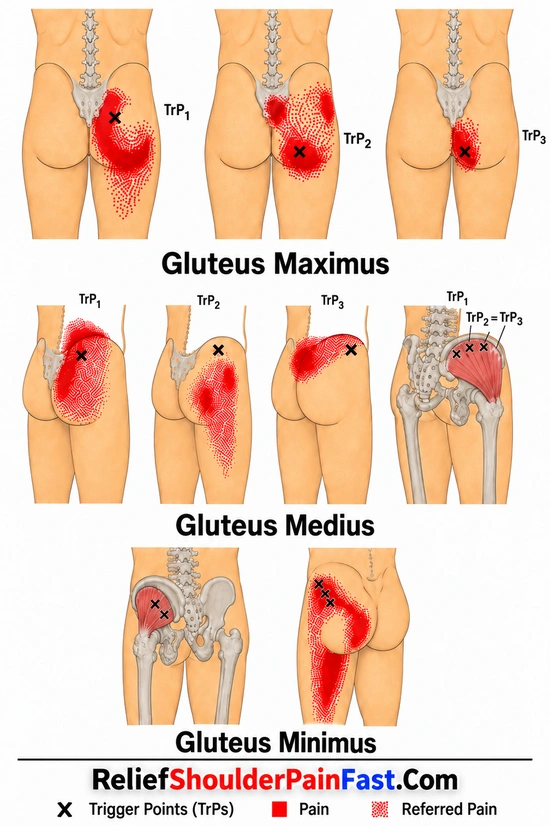
The gluteal muscles consist of three main muscles in the buttock region:
They help control lower-body movement, stabilize the pelvis, and provide the strength needed for walking, running, and standing up. They connect the pelvis to the upper thigh and surrounding connective tissue. Their attachment points and functions differ; together, they contribute to hip extension, abduction, and rotation.
The largest and most superficial muscle of the group gives the buttocks much of their shape. It extends the hip and helps generate power when rising, climbing, or running.
This fan-shaped muscle lies on the outer side of the hip. It moves the thigh away from the body and helps keep the pelvis level when standing on one leg.
The smallest and deepest of the three works with the gluteus medius to stabilize the hip and assist with movement and rotation.
Factors that may contribute to gluteal discomfort or altered muscle loading include:
A tennis ball may help some people ease gluteal muscle tension. Use gentle, comfortable pressure against a wall so you can control the force. Avoid pressing on bones or directly over areas that cause shooting pain, tingling, or numbness, and stop if symptoms worsen.
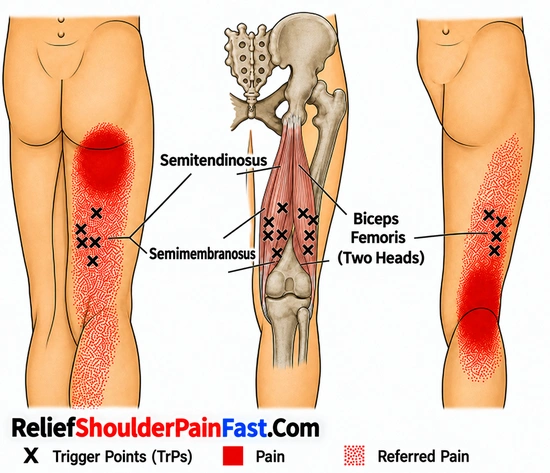
The hamstrings are a group of three muscles at the back of the thigh. Most of their fibers run from the pelvis near the hip to attachments just below the knee. The short head of the biceps femoris begins on the thighbone. The group includes:
Tender areas or trigger points in the hamstrings may be associated with:
These are possible contributing factors, rather than a checklist that can determine the cause of your pain.
The quadratus lumborum, gluteal muscles, and hamstrings work together during everyday movement. Discomfort or changes in movement in one area may affect how other areas are loaded. It can therefore be useful to assess these muscle groups together rather than focusing only on the painful spot.
Assessment should also consider the spine, joints, nerves, and other possible sources of symptoms. Massage may help muscular tension, but persistent or worsening pain deserves evaluation by a qualified healthcare professional.
Seek emergency care for new difficulty passing urine or loss of bladder or bowel control, numbness around the groin or saddle area, or severe or worsening weakness in both legs. Do not attempt to manage these symptoms with massage.
I hope you find this information useful.
Thank you for reading,
Michel Bourgeois
Licensed Massage Therapist