Sciatica From the Spine
The source is irritation or compression of a nerve root in the lower spine. Pain may travel from the buttock down the leg and can reach the foot or toes. Tingling, numbness, or weakness may occur.
Sciatica describes pain and other symptoms caused by irritation or compression of a sciatic nerve root. It commonly affects the buttock and the back of one leg and may extend into the foot or toes.
The sciatic nerve is the body’s largest nerve. It is formed by nerve roots in the lower spine and travels through the buttock before continuing down the leg. Sciatica is not simply inflammation of one long nerve; the problem often begins where one or more nerve roots leave the lumbar spine.
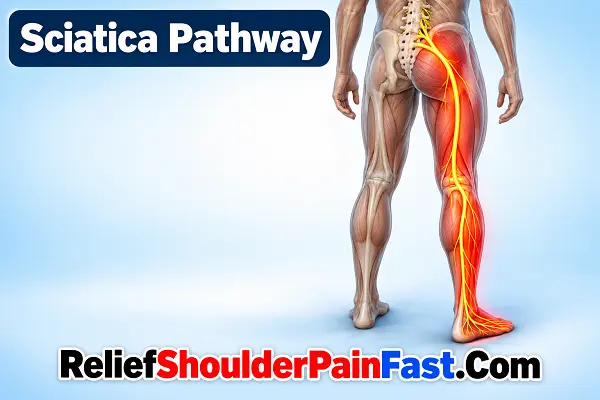
Symptoms may include sharp or burning pain, tingling, numbness, or weakness. They often begin in the buttock and travel down one leg. Lower-back pain may also be present, although the leg symptoms can be more noticeable.
A herniated disc is one possible cause, but spinal narrowing, age-related changes, and other conditions can also irritate a nerve root. A qualified healthcare professional should evaluate persistent or worsening symptoms.
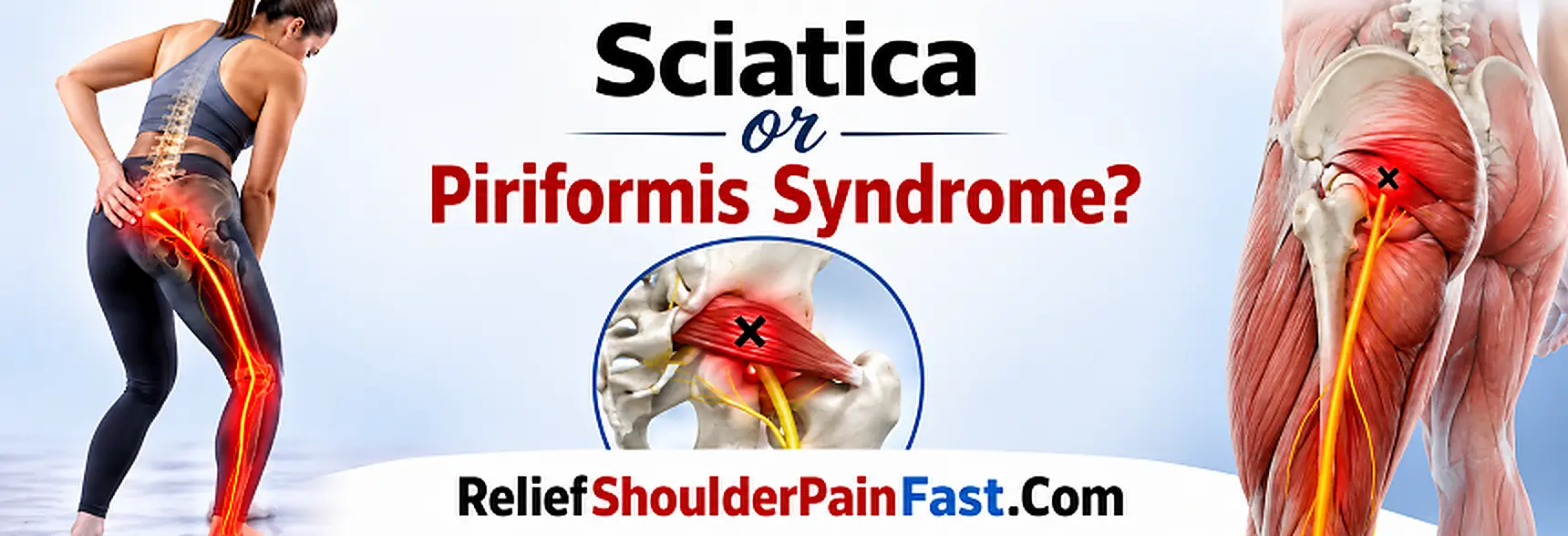
People sometimes use the term pseudo-sciatica for pain that resembles sciatica but does not come from a compressed spinal nerve root. Piriformis syndrome is one possible source of sciatica-like symptoms. Because the patterns can overlap, symptoms alone may not reveal the cause.
The source is irritation or compression of a nerve root in the lower spine. Pain may travel from the buttock down the leg and can reach the foot or toes. Tingling, numbness, or weakness may occur.
The piriformis muscle is located deep in the buttock. Irritation or compression of the sciatic nerve near this muscle may cause buttock pain and symptoms down the leg. The pattern varies and may sometimes extend below the knee.

Piriformis syndrome occurs when the sciatic nerve becomes irritated or compressed in the deep buttock region near the piriformis muscle. Muscle tension, local irritation, repetitive activity, prolonged sitting, or individual anatomy may contribute.
Piriformis syndrome is only one possible explanation for buttock and leg pain. Problems involving the spine, hip, sacroiliac region, or other tissues may create similar symptoms, so self-diagnosis can be misleading.

A thick wallet in a back pocket can place uneven pressure beneath one buttock and tilt the pelvis while sitting. This may aggravate local muscles and sensitive tissues in some people.
If you regularly carry a wallet in your back pocket, move it before sitting—especially during long drives or desk work. This simple change may reduce pressure and improve sitting comfort, although it is not a substitute for evaluation when symptoms persist.
The most appropriate treatment depends on the cause of the symptoms. A healthcare professional can assess neurological signs, determine whether the problem may originate in the spine, and decide whether imaging or referral is necessary.
When muscular tension contributes to buttock discomfort, a massage therapist experienced in therapeutic or clinical work may help reduce tension in the piriformis, gluteal muscles, and surrounding fascia. Massage may improve comfort and movement, but it does not reposition vertebrae, repair a herniated disc, or remove spinal nerve compression.
If symptoms originate from a spinal nerve root, massage may still help with secondary muscle guarding and general relaxation. It should be used as supportive care—not as a replacement for appropriate medical assessment. Depending on the findings, care may involve a physician, physical therapist, or another qualified musculoskeletal professional.
Get urgent help for new loss of bladder or bowel control, numbness around the groin or saddle area, severe or worsening leg weakness, symptoms affecting both legs, or severe pain following a major injury. Do not massage these symptoms.
Muscles and fascia strongly influence movement, posture, and how forces travel through the body. They deserve attention, but bones, joints, discs, nerves, muscles, and connective tissues work together. Effective care begins by identifying which structures are most likely contributing to the symptoms.
I hope you find this information useful.
Thank you for reading,
Michel Bourgeois
Licensed Massage Therapist