The Thoracic Iliocostalis
The Thoracic Iliocostalis Muscle: Trigger Points and Referred Pain
Where Is the Thoracic Iliocostalis Located?
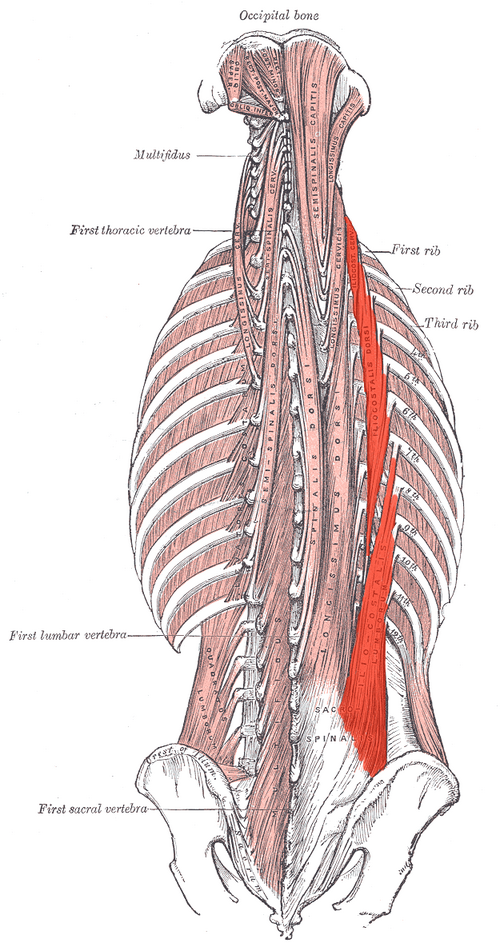
About the Thoracic Iliocostalis
The Thoracic Iliocostalis, also called the Iliocostalis Thoracis, is part of the erector spinae muscle group. It runs vertically along the outer portion of the middle back, connecting the lower ribs to the upper ribs and lower neck.
Working with the other erector spinae muscles, it helps extend the spine, bend the trunk to the same side, support upright posture, and control the body as you bend forward.
Thoracic Iliocostalis Referred Pain and Related Symptoms
Trigger points in the Thoracic Iliocostalis may produce aching or tenderness along the middle back and around the ribs. Discomfort may be felt beside the spine, beneath the shoulder blade, or farther around the side of the rib cage.
- A localized ache or tightness in the middle back.
- Tenderness along the outer edge of the erector spinae muscles.
- Discomfort beneath or near the lower shoulder blade.
- Pain that may spread around the side of the rib cage.
- Discomfort during prolonged standing, bending, twisting, or deep breathing.
These symptoms may resemble those associated with the ribs, joints of the spine, other back muscles, or internal organs. A referred-pain pattern may provide a useful clue, but it cannot confirm the cause of back or rib pain.
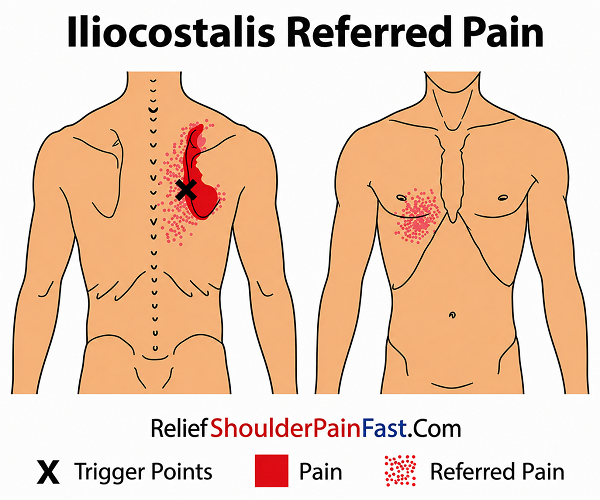
The image above shows possible Thoracic Iliocostalis trigger points and referred discomfort.
What May Contribute to Thoracic Iliocostalis Trigger Points?
- Long periods of standing or sitting without changing position.
- Repeated bending, twisting, or lifting.
- Lifting or carrying an uneven load on one side.
- A sudden increase in exercise or manual activity.
- Frequent coughing or other repeated strain involving the rib cage.
- Insufficient recovery between demanding activities.
How to Help Prevent Thoracic Iliocostalis Trigger Points from Returning
- Change position regularly during prolonged sitting or standing.
- Increase lifting and exercise intensity gradually.
- Keep loads close to your body and divide weight evenly when possible.
- Use your legs and hips when lifting instead of relying only on your back.
- Warm up before demanding physical activity.
- Allow enough recovery time between strenuous activities.
Reducing or modifying the aggravating movement may be as important as massaging the tender area.
Thoracic Iliocostalis Self-Massage
Gentle self-massage may help reduce tension and tenderness in the Thoracic Iliocostalis.

Thoracic Iliocostalis Massage
Thoracic Iliocostalis Massage Instructions
Place a tennis ball or soft massage ball between the wall and the muscular area of your middle back, several inches away from the spine. Lean into the ball gently and move slowly until you locate a tender area.
Hold comfortable pressure for a few seconds, then release. You may also make small, slow movements from side to side or up and down. Keep the pressure controlled and avoid holding your breath.
Use caution: Do not roll directly over the spine, shoulder blade, or ribs, and do not use forceful pressure. Stop if the massage causes sharp pain, numbness, tingling, weakness, dizziness, breathing difficulty, or increased chest or rib pain.
Sources and References
- Clair Davies and Amber Davies. The Trigger Point Therapy Workbook: Your Self-Treatment Guide for Pain Relief. New Harbinger Publications, 2013.
- Anatomy, Back, Muscles — NCBI Bookshelf.
- Iliocostalis Muscle: Attachments, Innervation and Function — Kenhub.