Pectoralis Major and Pectoralis Minor Muscles
The pectoralis major and pectoralis minor are two muscles located at the front of the chest. Although they work together during many shoulder and arm movements, they differ in size, location, and referred-pain patterns. Trigger points in either muscle may cause discomfort in the chest, shoulder, or arm.
Location of the Pectoralis Muscles
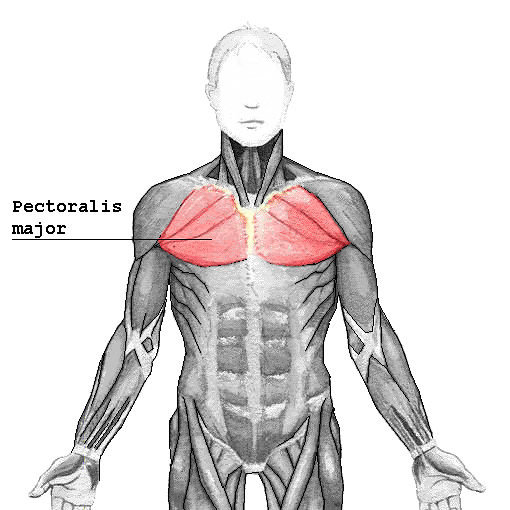
Pectoralis Major
The pectoralis major is the large, superficial muscle covering most of the front of the chest.
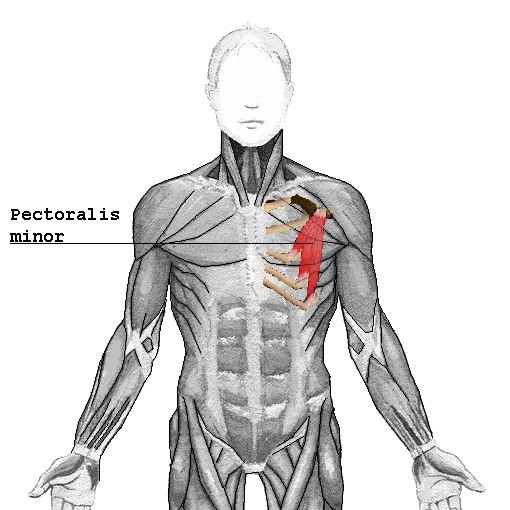
Pectoralis Minor
The pectoralis minor is a smaller, deeper muscle located underneath the pectoralis major.
Image attribution: CC BY-SA 3.0
About the Pectoralis Muscles
The pectoralis major and pectoralis minor are two muscles located at the front of the chest. The pectoralis major is the large, superficial chest muscle, while the smaller pectoralis minor lies underneath it. Although they are separate muscles, both influence the movement and position of the shoulder.
The pectoralis major helps move the arm forward, across the chest, and
inward. The pectoralis minor helps stabilize and move the shoulder blade
forward and downward. When these muscles become tight or develop trigger
points, they may contribute to discomfort in the chest, the front of the
shoulder, and the arm.
The pectoralis major and minor play a very important
role in postural alignment, particularly in head posture, which is too
far forward in some people. A forward-head posture is often caused by trigger
points in the pectoralis major, which pull the shoulder blades forward,
resulting in rounded shoulders and a forward-head posture. Postural correction
is rarely successful without treating the pectoralis major.
Pectoralis Trigger Points: Common Symptoms
- Pain or tenderness in the chest muscles.
- Pain in the front of the shoulder.
- Discomfort that may extend into the upper arm or forearm.
- Pain when reaching forward, pushing, or moving the arm across the chest.
- Tightness across the chest and reduced shoulder mobility.
- Tender areas that reproduce familiar discomfort when pressed.
Referred pain from pectoralis trigger points may resemble or overlap with symptoms associated with other conditions, including:
- Rotator cuff disorders.
- Biceps tendon irritation.
- Thoracic outlet syndrome.
- Costochondritis or irritation of the chest wall.
- Neck-related nerve irritation.
- Heart-related chest pain, including angina.
About the Pectoralis Major
The pectoralis major is the large muscle covering the front of the chest. Trigger points in this muscle may cause pain across the chest and the front of the shoulder. Discomfort may also travel down the inside of the arm and, in some cases, reach the hand.
Because this referred-pain pattern can resemble other conditions, people may not realize that a tight or tender area in the chest muscle could be contributing to their discomfort.
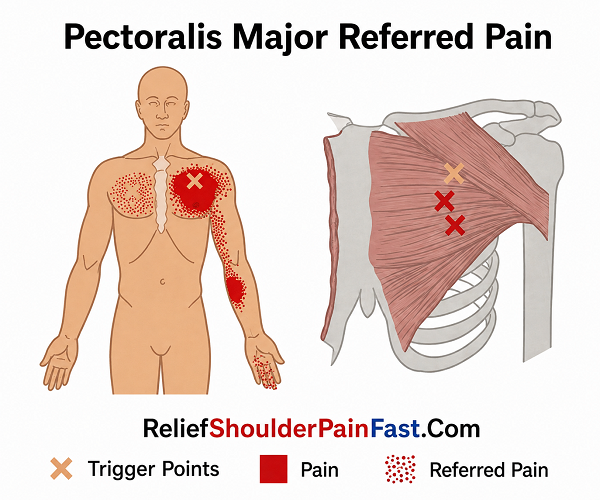
The image above shows possible locations of Pectoralis Major trigger points.
About the Pectoralis Minor
The pectoralis minor is a smaller muscle located underneath the pectoralis major. Trigger points in this muscle may cause discomfort in the chest and the front of the shoulder, with pain sometimes extending down the inside of the arm.
Because the muscle lies beneath the pectoralis major, people may find it difficult to recognize it as a possible source of their symptoms.
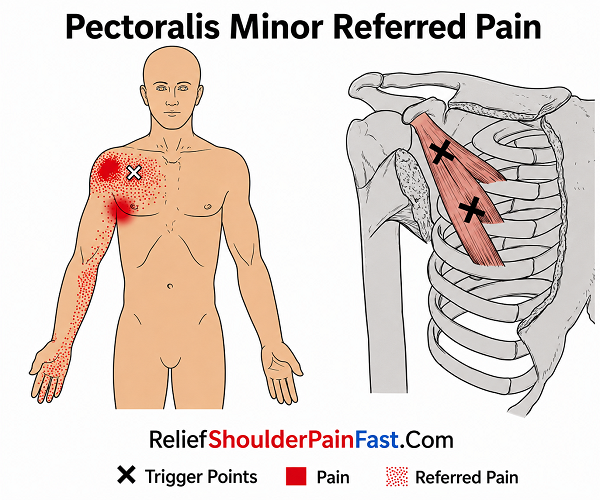
The image above shows possible locations of Pectoralis Minor trigger points.
Pectoralis Major Self-Massage
Self-massage may help reduce tension and tenderness in the pectoralis major.
How to Massage the Pectoralis Major and Deactivate Trigger Points
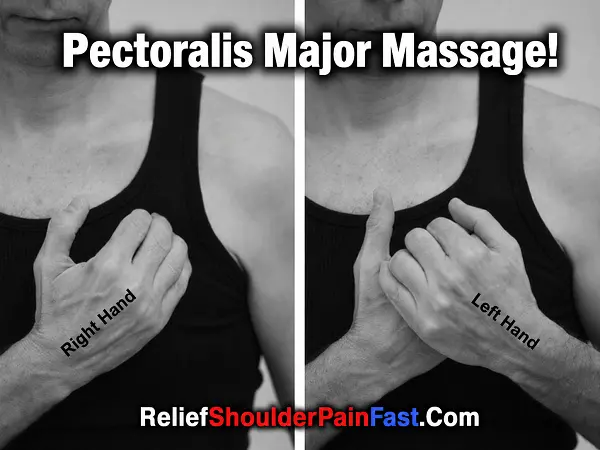
1. Massage using both hands
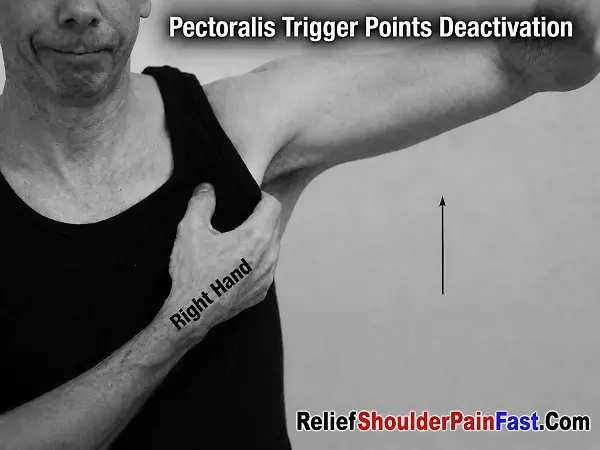
2. Grasping the muscle

3. Massage with a Ball
Pectoralis Major Massage Instructions
Picture 1 — Using both hands: To massage the left pectoralis major, curve the fingers of your right hand into a hook and place your fingertips on the muscle. Place your left hand over your right hand to provide additional support and pressure while you slowly massage the area. To massage the right pectoralis major, reverse the hand positions and repeat the same technique.
Picture 2 — Grasping the Pectoralis Major: Gently grasp the muscle near the front of the armpit between your thumb and fingers. While maintaining comfortable pressure, slowly raise your arm to stretch the muscle. This is known as a pin-and-stretch technique. Do not press deeply inside the armpit.
Picture 3 — Using a massage ball: Place a Myo Ball or tennis ball between the pectoralis major and a wall. Lean into the ball gently and move slowly until you locate a tender area. Apply comfortable pressure, then release.
Pectoralis Minor Self-Massage
Because the pectoralis minor lies underneath the pectoralis major, it must be approached gently through the overlying muscle.
How to Massage the Pectoralis Minor
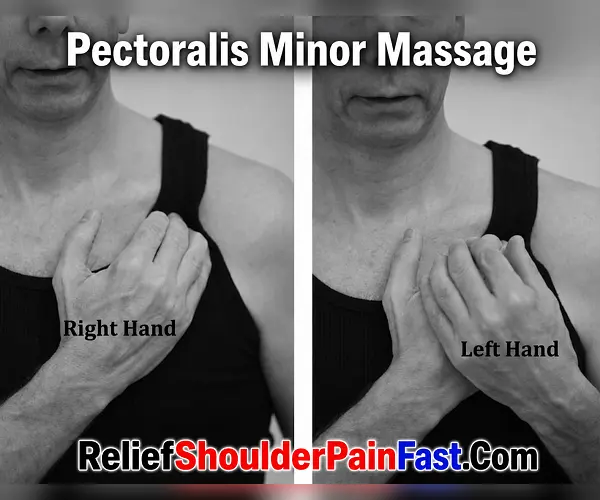
Pectoralis Minor Massage
Pectoralis Minor Massage Instructions
To massage the left pectoralis minor, use the fingertips of
your right hand to gently explore the upper chest, just below
the collarbone and toward the front of the shoulder. When you
locate a tender area, apply gentle, comfortable pressure and
massage it slowly.
To massage the right pectoralis minor,
reverse the hand position and repeat the same technique.
Because this muscle lies beneath the pectoralis major, avoid
using excessive pressure and do not press deeply inside the
armpit.
Sources and References
- Clair Davis & Amber Davis. The Trigger Point Therapy Workbook: Your Self-Treatment Guide for Pain Relief..New Harbinger Self-Help Workbook,2013.
- The Pectoralis Major: Anatomy and Function — TeachMeAnatomy.Com
I hope you find this information helpful.
Thank you for reading,
Michel Bourgeois
Licensed Massage Therapist
This article is provided for educational purposes only and does not constitute medical advice, a diagnosis, or a treatment.